



Over three days in Qoubaiyat, the eighth edition of REEF Encounters brought together films, environmental discussions, hikes, workshops, local producers and stories from the people who care for Lebanon’s land.
REEF brings cinema, craft and community to Qoubaiyat
REEF brings cinema, craft and community to Qoubaiyat
By Rayanne Tawil | September 29, 2026

Reading time: 5 min
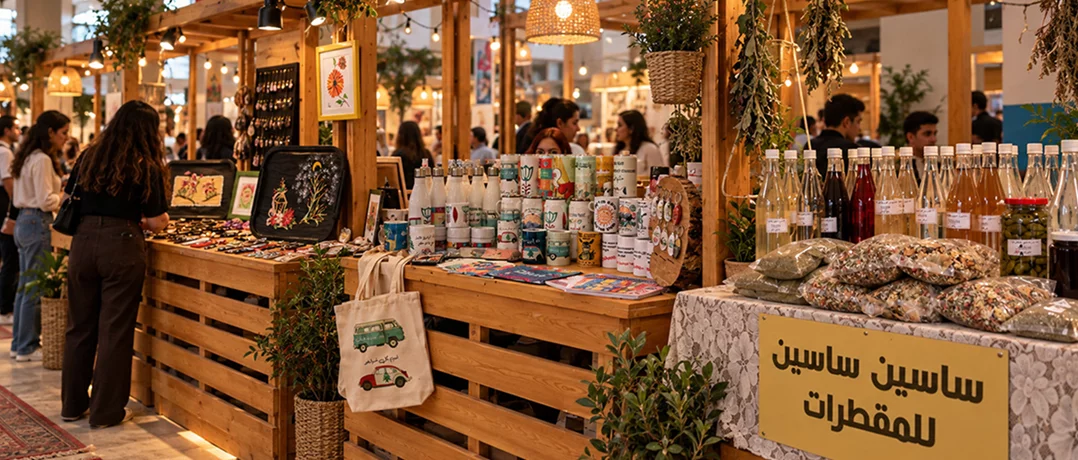
In Qoubaiyat, the conversation about the environment did not stay inside a screening room. It moved through fabric, plants, food, music, mountains and the people gathered around long tables at the Carmelite School.
From Friday to Sunday, the eighth edition of REEF Encounters brought its program to Qoubaiyat under the theme “The Land and Its People,” filling three days with film screenings, workshops, hikes, discussions, a local market and activities connecting environmental questions with everyday life. The program included everything from natural dyeing and upcycling traditional fabrics to a hike in Akroum, a visit to Al-Shambouk farm, environmental films, music and the premiere of short films created by Lebanese filmmakers and also by women from Akkar, Tripoli and Hermel.
For Eliane Raheb, REEF’s founder and artistic director, bringing the encounters to Akkar was connected to a much older idea. In 2016, she came to the area to film a documentary about a farmer. When it was time to screen the film, there was no cinema, so his restaurant became one.
“That’s how it all started,” she explains to The Beiruter. What began as a temporary cinema eventually became REEF, which has spent eight editions bringing film and cultural programming into rural communities.
A cinema that starts a conversation
Cinema remains one of REEF’s main languages. The festival’s Biodiversity and Cinema program brings filmmakers and environmentalists together, while the films themselves become starting points for conversations about the places people live in.
Joelle ElKhoury-Serrano, REEF’s director of development and communication, explains that this is where the organization’s communication begins.
“We believe that films spark dialogue,” she says. “We do films because we want to spark dialogue in the local community.”
That philosophy ran throughout the weekend, with screenings accompanied by discussions, alongside a forum bringing environmental activists together and activities designed around young people. REEF’s wider work also includes youth mentorship, community engagement and storytelling projects focused on Lebanon’s rural and environmental life.
For Nicole Kamato, one of the organizers, the goal is to leave people with a different understanding of where they stand within their surroundings.
“We are aiming that the impact of REEF experience would serve as a harsh reminder that people are not isolated and that they are a fundamental part of all the nature and ecosystem around them,” she says. “We believe that cinema could have a greater impact in this matter.”
When old fabric gets another life
The workshops gave that idea a physical form.
Tables filled with scraps of fabric, scissors, threads and natural materials became busy working spaces, with participants cutting, exchanging pieces and helping one another. In Rita Tanios’ workshop, discarded curtains, tablecloths and linens were transformed into cushions and scarves, turning materials that might otherwise have been forgotten into something people could take home
Tanios, founder of Upcycled Recycled Designs Couture, has been part of REEF several times. For her, the workshop is also a way of changing how people look at what they already own.
“If you have something at home that you don't need anymore, you shouldn't throw it away,” she says. “You should think about how to give it a new life. Or give it to someone who will give it a new life.”
There was something particularly lively about seeing that process happen collectively. One person would cut fabric, another would offer a piece, someone else would start assembling it. The result wasn’t just about following a fixed object but also about discovering what could emerge from what was already there.
Color from the landscape
At another table, Takla Khoueiry's workshop had natural dyes and ecological printing, using plants and materials connected to the landscape.
“Natural materials teach us patience and humility,” she says. “With nature you have to wait, listen, and accept.”
The color can change according to the season, the water or the weather, making every piece unique. During the workshop, participants printed leaves and other natural elements onto shirts, creating patterns directly from what surrounded them.
For Khoueiry, this connection has particular meaning among younger generations. “When young people in the workshops see color coming from a plant they know from their village, they light up,” she says. “It connects them to their grandmothers but in a new, modern way.”
Remembering Mona
The weekend also carried a heavier memory. REEF honored environmentalist Mona Khalil.
Khalil died in June from injuries sustained when an Israeli strike targeted her home in Mansouri. She had spent more than two decades protecting sea turtles along the southern coast through the Orange House Project
The tribute included a screening of “Nafas,” Sabine Shamaa’s film featuring Khalil and the turtles she spent years protecting. Stories from those who knew her followed, bringing the environmental work back to the person behind it.
Eliane spoke about what Khalil meant to REEF, while Ramy Khashab took the stage to remember a relationship that began when he was only 12, when he started accompanying her and helping with her work on Mansouri beach. He spoke about her legacy and her death at the hands of Israeli forces.
Journalist and activist Fadia Joumaa, one of the last people to speak with Khalil before her death, also shared memories of the woman behind the conservation work.
“Mona taught us not to just protect the turtles but all nature,” she said.
Three days, many ways of listening
That sentence appeared to sit naturally alongside the rest of the program. REEF moved between a film projected onto a screen, hands working through old textiles, a mountain path, a farm, a local market and stories passed from one generation to another.
For REEF, the encounters are a continuation of a much wider effort to bring culture, environmental awareness and community together across Lebanon. In Qoubaiyat, that effort could be seen in the simplest details: scissors resting beside scraps of cloth, leaves pressed onto white cotton, films lighting up the school courtyard and people passing materials across a table.
As Rita puts it, “Each one of them had a story at home. We are taking this story from the beginning and giving it a new soul and a new life with a new person and a new story.”
-
-
-
Rayanne TawilCultural writer
-
