



On International Translation Day, The Beiruter explores the world of Lebanese Sign Language through the experiences of two interpreters, examining the communication barriers facing Lebanon’s Deaf community and the struggle for accessibility and professional recognition.
Lebanon’s neglected fourth language

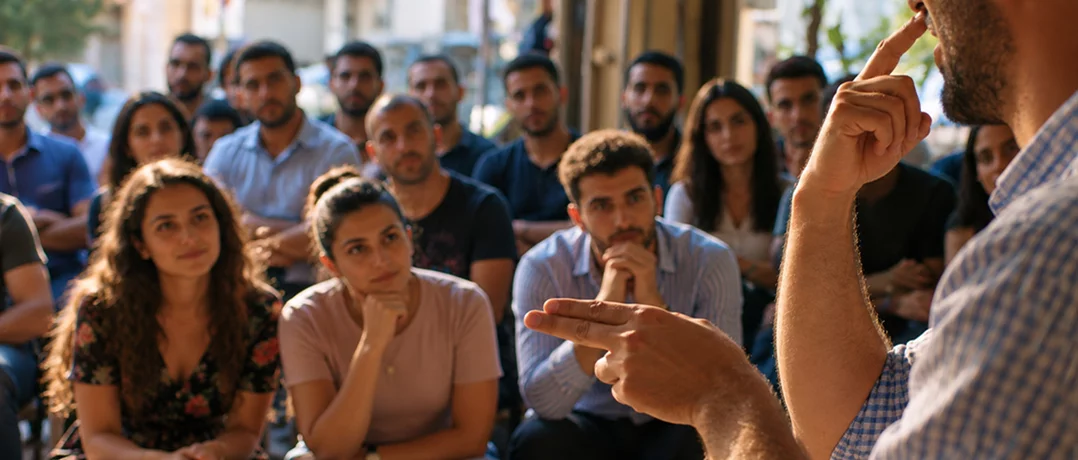
A Lebanese person can speak three languages and still be unable to communicate with thousands of people in their own country.
Lebanese Sign Language remains unfamiliar to much of the hearing population. With its own grammar, expressions and regional variations, it is a language whose users often face barriers not because they cannot communicate, but because so few people understand their language.
According to estimates provided to The Beiruter by The Learning Center for the Deaf, approximately 12,500 Deaf people live in Lebanon, yet the country has only around 30 sign language interpreters. The profession itself remains without a formal national accreditation framework.
More than gestures: A language of its own
Contrary to popular belief, sign language is not universal. According to the United Nations, more than 300 sign languages exist worldwide.
For Céline Mouzannar, a Lebanese accessibility and inclusion consultant and sign language interpreter, the journey began while delivering awareness sessions to marginalized communities across Beirut, the North, the Beqaa and refugee camps. Although her organization was working to make essential information accessible, she began to recognize a gap in its outreach.
Until I realized that there was an entire Lebanese community we were not reaching: the Deaf community.
Mouzannar subsequently learned Lebanese Sign Language and worked with Deaf and hearing instructors to develop a course for her colleagues, improving healthcare accessibility for Deaf beneficiaries.
Sign language, however, involves more than gestures. It combines hand movements, facial expressions, body positioning and spatial communication, with grammatical structures distinct from spoken languages.
Even within Lebanon, variations exist. Mouzannar identifies approximately six or seven regional and school-based varieties of Lebanese Sign Language, shaped by geography and educational institutions.
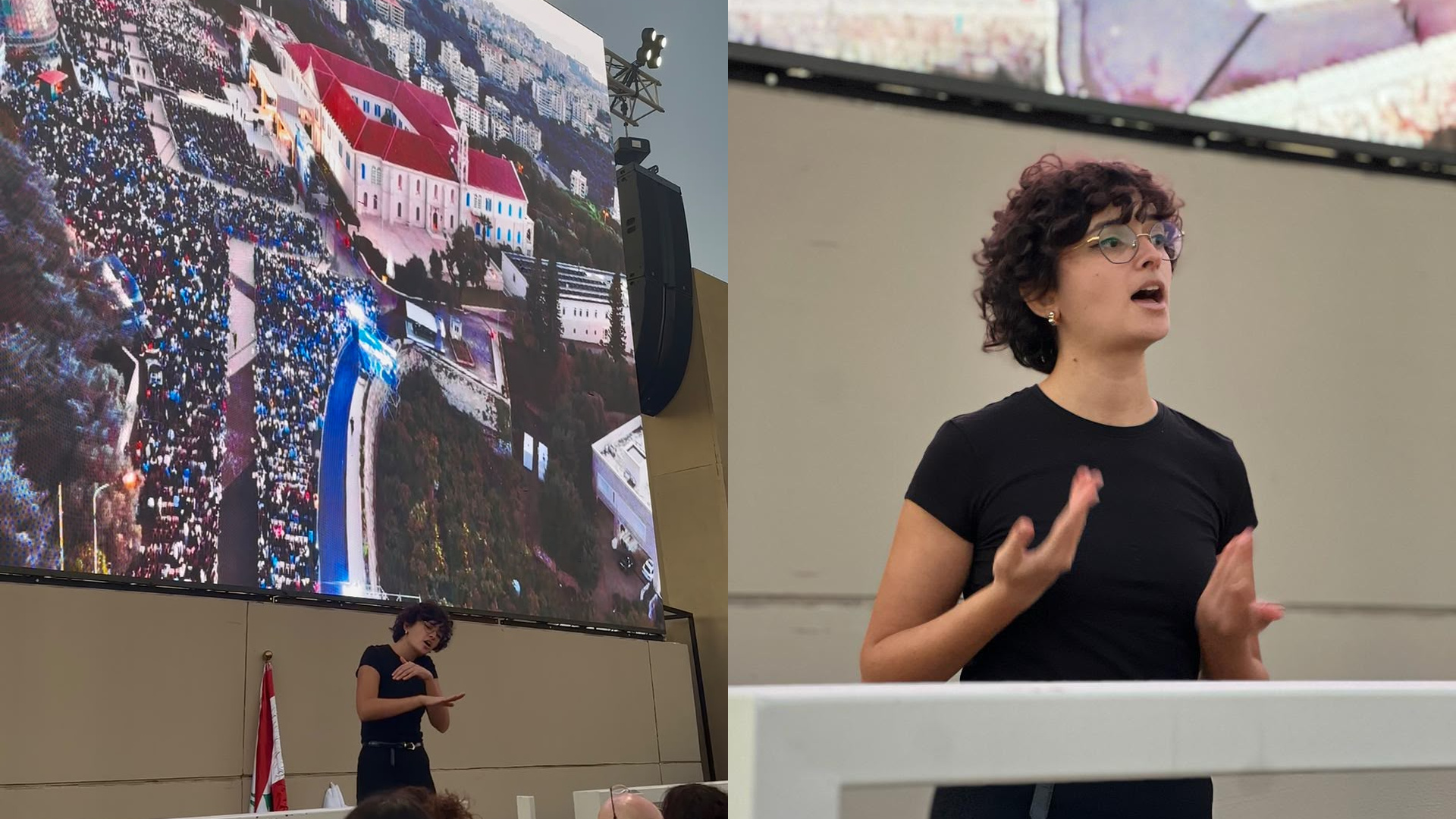 Celine Mouzannar interpretating for the Pope Youth Meet 2025.
When interpretation becomes a matter of access
Being present does not always mean being included. Malak, a Deaf sign language teacher, interpreter and advocate who grew up in a Deaf family, knows this reality firsthand.
"I understand what it feels like when you are present, but you cannot fully understand what is happening around you," she explained.
My job is not just to translate words, but to make sure the meaning is clear to both Deaf and hearing people.
In healthcare, the absence of an interpreter can have serious consequences. While researching healthcare accessibility in Lebanon, Céline Mouzannar interviewed Deaf women who described giving birth without adequate communication support.
"Some mothers described having to remove their hearing aids during childbirth and being unable to hear what was happening around them, including when complications arose and they had to be rushed into surgery. They were unable to lip-read because healthcare providers were wearing masks, and no sign language interpreter was available to support communication,” the consultant told The Beiruter.
This exclusion extends beyond hospitals. She noted that a Deaf friend was invited to receive an award at a ceremony where no interpreter had been arranged. Even an occasion meant to celebrate their achievement had failed to account for their communication needs.
"When we can, we step in because we don't want them to miss out on an important moment," she said.
This incident illustrates a broader problem. Sign language interpreters are often treated as an afterthought rather than an essential part of accessibility. When interpretation is overlooked during planning, it is rarely included in the budget, leaving organizers to rely on interpreters willing to volunteer.
Access should not depend on luck, on whether a Deaf person happens to have an interpreter friend who is available and willing to step in.
Yet interpretation alone is not a universal solution: not every Deaf person uses sign language, and communication needs vary.
For Malak, the issue is about ensuring that Deaf people can participate independently in education, employment and everyday life, rather than remaining spectators in conversations that concern them.
A language... centuries in the making
Long before schools began teaching it, Deaf communities had developed their own ways of communicating. References to visual communication date back to ancient Greece, where Plato described how people unable to speak could communicate through their hands, heads and bodies.
Formal Deaf education began developing in Europe centuries later. Around 1760, French priest Charles-Michel de l'Épée established a school for Deaf children in Paris. Although frequently credited with inventing sign language, he had encountered a Deaf community already using signs to communicate. By incorporating those signs into his teaching, he helped establish a model of Deaf education that would influence institutions beyond France.
But recognition was far from guaranteed. In 1880, an international congress on Deaf education in Milan adopted resolutions favoring speech and lip-reading over sign language. The decision influenced educational practices across numerous countries, where signing was discouraged and Deaf teachers increasingly excluded.
A major turning point came in 1960, when American linguist William Stokoe demonstrated that American Sign Language possessed its own systematic linguistic structure. His research helped challenge the perception of sign languages as collections of gestures rather than fully developed languages.
International recognition followed gradually. In 2006, the United Nations adopted the Convention on the Rights of Persons with Disabilities, recognizing sign languages and establishing obligations concerning their use and accessibility. Four years later, an international congress in Vancouver formally rejected the resolutions adopted in Milan in 1880.
In 2017, the United Nations General Assembly proclaimed September 23 the International Day of Sign Languages, commemorating the establishment of the World Federation of the Deaf in 1951.
While these developments helped advance the international recognition of sign languages, Deaf communities in Lebanon were pursuing their own path toward education and accessibility.
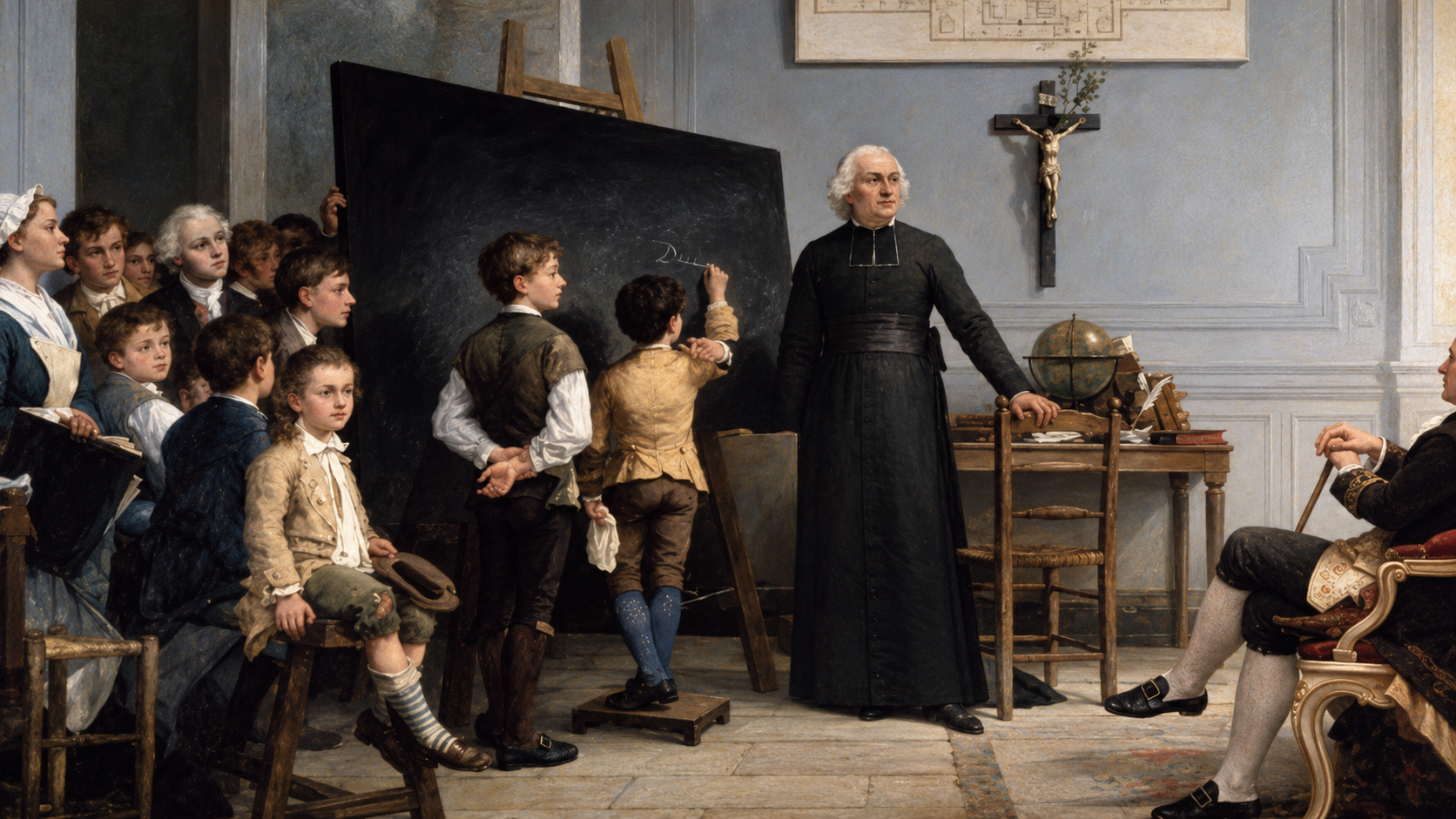 Charles-Michel de l’Épée teaching Deaf students in 18th-century Paris.
The development of Deaf education in Lebanon
For generations, Deaf children in Lebanon had little access to formal education. It was not until the 1950s that specialized institutions began opening their doors, gradually transforming educational opportunities for a largely overlooked community.
According to researcher Antoine Roumanos, four institutions were established between 1955 and 1960, including the Lebanese School for the Blind and the Deaf in Hadath and the Institut de Rééducation Audio-Phonétique (IRAP). These institutions gradually expanded academic and vocational opportunities for Deaf students, although Lebanon's civil war subsequently disrupted schooling and strained their resources.
A significant milestone came in 2001, when Dr. Hussein Ismail, himself Deaf, and his wife Nadine, a specialist in Deaf education, founded the Learning Center for the Deaf in Baabda. Two years later, the center introduced a secondary education program, allowing students whose educational opportunities had often ended at the Brevet level to pursue the Lebanese Baccalaureate and university studies.
Yet expanding access to education did not eliminate the barriers facing Lebanon's Deaf community. Beyond the classroom, communication remains a challenge in healthcare, employment and public life, where sign language interpretation is not always available.
The history of Lebanese Sign Language, however, extends beyond educational institutions. It also belongs to generations of Deaf Lebanese people who developed and passed down their language within their families and communities.
Beyond interpretation: Recognition and technology
Despite their essential role, sign language interpreters in Lebanon lack a formal national accreditation framework. According to the Learning Center for the Deaf, efforts are underway to establish a professional order or obtain a qualification recognized by the Ministry of Education.
Meanwhile, emerging technologies offer new possibilities for accessibility. Céline Mouzannar believes AI could improve access to information, particularly by making live captioning standard practice at in-person meetings, conferences and public events, rather than limiting it to online settings. However, technology should complement sign language, not replace it.
"For many Deaf people, sign language is their first or most comfortable language, and it can provide a depth of understanding and expression that written or spoken-language alternatives may not," the consultant explained.
AI-powered signing avatars are also emerging, although Mouzannar considers the technology to be in its infancy. Interpretation requires more than reproducing gestures: facial expressions, body movements, spatial relationships and cultural context shape meaning. Human interpreters also recognize confusion, clarify information and adapt to their audience in real time, abilities that remain challenging to automate.
"The goal should be to use technology to expand access and support Deaf people's autonomy, not to remove the human, linguistic, and cultural dimensions of sign language," she emphasized.
For Malak, International Translation Day highlights the need for greater awareness and professional recognition, particularly in Lebanon, where access to interpretation remains limited.
"Deaf people don't need pity; we need access, communication, and equal opportunities," she said, "we are not simply translating words, we are connecting two worlds and making sure Deaf people have equal access to information and opportunities."
-
-
-
Michella RizkContent Manager/WriterFocusing on social affairs.
-
