



Lebanon’s restaurant sector is facing a deepening crisis as declining purchasing power, a 40% drop in sales, a 50% decline in delivery orders and rising operating costs push businesses closer to closure.
The empty tables crisis

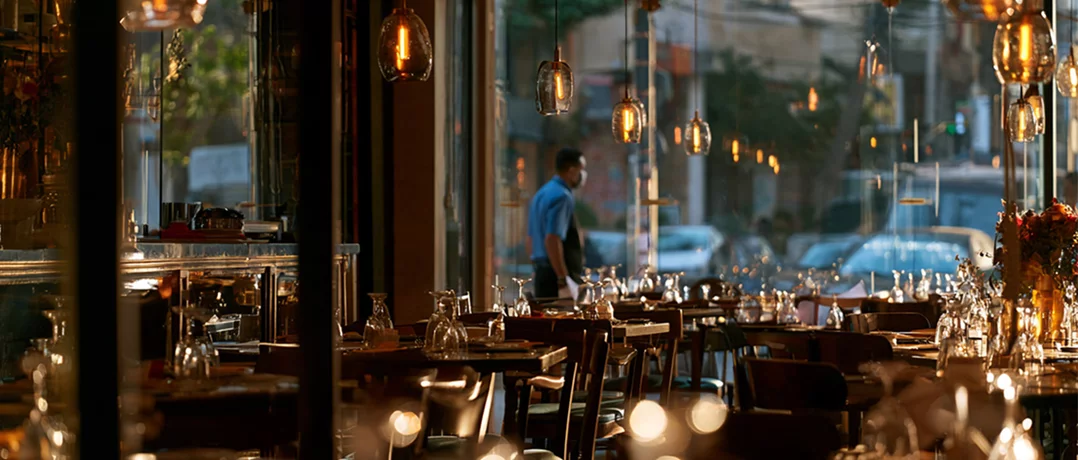
Lebanon’s restaurants, cafés, nightclubs and pastry shops are entering an extremely difficult phase as declining purchasing power, mounting inflationary pressures and rising operating costs continue to weigh on the sector. After years of economic and monetary crises, consumer spending has become increasingly focused on basic necessities, while sectors considered non-essential, including restaurants, cafés and delivery services, are seeing their share of household spending shrink.
The pressure on restaurants is not limited to declining demand. It also affects businesses’ ability to survive and finance their daily operations amid weak liquidity, the absence of bank financing and shrinking profit margins. Between the need to preserve jobs on one hand and rising wage costs on the other, businesses are facing an increasingly difficult equation. According to sector representatives, the tourism season is no longer sufficient to compensate for the decline recorded throughout the year. Meanwhile, as local purchasing power weakens, spending by expatriates is also affected by difficult economic conditions in their countries of residence, reducing reliance on tourism and foreign spending.
The sector faces its worst downturn
The president of the Syndicate of Owners of Restaurants, Cafés, Nightclubs and Pastry Shops, Tony Al Rami, described the current period as one of the worst “phases the sector has experienced in nearly 20 years.”
Speaking to Nidaa Al Watan, he said the sector is experiencing “a clear state of recession and contraction, amid the loss of purchasing power among a large segment of Lebanese people.”
Al Rami explained that “the situation today is one of recession, contraction and lost purchasing power that has lasted for 20 years, and this is the worst phase we have gone through.”
He added that “a psychological factor has affected both the poor and the wealthy,” alongside the decline in purchasing power among the middle class, which he described as “the engine and driver of the economy.”
He stressed that “the psychological factor has begun playing a major role in market activity,” saying: “There is no appetite for spending. The simple summary is that purchasing power is no longer available, not for restaurants, cafés, or even delivery services.”
He noted that the sector is clearly seeing this decline through both a drop in the number of delivery orders and a decrease in the average bill value.
Accumulated crises increase operating costs
Al Rami links the current situation to the accumulation of economic, financial and living crises, in addition to developments in the Gulf and rising prices and inflation. He explained that the nature of the Lebanese economy makes it highly vulnerable to global price fluctuations.
“Lebanon consumes around 80% imported goods, meaning the Lebanese economy imports part of global inflation through its foreign purchases,” he said. “At the same time, operating costs for businesses have increased across different areas, particularly energy costs.”
He noted that expenses are no longer limited to one category, but include “generator maintenance, diesel, gas, water purchases and water treatment,” all of which increase the overall cost of operating businesses and directly put pressure on their ability to continue.
Al Rami warned that maintaining the current situation at the same pace would lead to more closures.
“There is no ability to continue under these conditions. We will begin seeing businesses close one after another if the situation remains unchanged,” he said.
Businesses without financial capacity or financing
Al Rami believes the problem is not only the rise in expenses, but also the absence of financial tools allowing businesses to withstand these pressures.
“There is no financial capacity in companies, no reserves and no banks,” he said, adding that “the business owner can no longer even rely on personal funds to cover operational needs.”
He described the sector’s situation by saying: “We have been left in the desert, and there is no government incentive plan for the private sector.”
He warned that the direct consequence would be more closures, predicting that “dozens of businesses could shut down in the near future” if conditions do not change.
According to Al Rami, the issue is not limited to the Lebanese market. Reliance on Lebanese expatriates, particularly those in Gulf countries, is no longer guaranteed as before, since “our community in the Gulf is also facing a crisis.”
The wage dilemma: business or employee?
Regarding the workforce, Al Rami said the sector faces an extremely difficult equation. Businesses cannot ignore the need to increase wages amid rising living costs, but higher salaries under current conditions could create additional burdens that companies cannot absorb.
“In terms of labour, we have no choice. Salaries should be increased, but if we raise salaries, businesses will collapse,” he said.
He added: “On one hand, we want to preserve the business, and on the other hand, we want to preserve workers. The situation is extremely difficult.”
At the activity level, Al Rami revealed that “the sector has recorded a 40% decline compared with the first six months,” noting that “hopes had been placed on the tourism season to compensate for part of the losses.”
He said that “the season lasted 30 days, and that is not enough,” especially since activity during this period took place amid very weak purchasing power.
He also explained that expatriates, whether coming from the Gulf or Europe, no longer have the same purchasing power they previously had due to economic pressures in their countries of residence.
“An expatriate coming from the Gulf or Europe has limited purchasing power because they are facing their own crises. In Europe, there is a high cost of living, and in the Gulf, the economic situation is also difficult,” he said.
Delivery shifts from daily service to luxury
The decline is even more visible in the delivery sector, where Al Rami estimates that “the number of orders has fallen by around 50%,” reflecting a direct change in Lebanese consumer behaviour.
He said restaurants themselves “have become a luxury,” and delivery services are no longer immune to this shift, as consumers increasingly reduce this type of spending and turn toward preparing food at home.
Summarising the transformation, Al Rami said: “Delivery orders have declined by around 50%. Restaurants have become a luxury, and delivery has too. Customers now prefer having a sandwich at home.”
Lebanon’s restaurant sector is currently facing a difficult economic equation combining declining demand, rising operating costs, weak liquidity and the absence of financing. The tourism season and expatriate spending are no longer enough to close the gap. As purchasing power continues to shrink, businesses have fewer options, especially as any further increase in wages or operating expenses may exceed their limited ability to survive.
