



Young Lebanese architects are redefining the future of design through technology, AI, social media and contemporary spaces that reflect a new generation’s vision.
Lebanon's young architects reimagine modernity
Lebanon's young architects reimagine modernity
By The Beiruter | October 05, 2026

Reading time 4 min
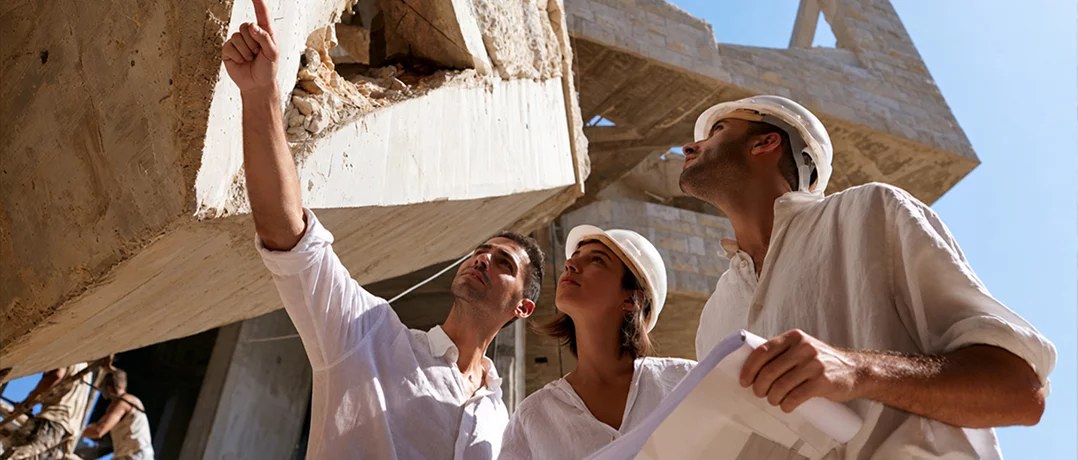
Lebanon's newest architects grew up with Instagram, Pinterest and now artificial intelligence. They see projects from Tokyo, Copenhagen and Beirut in the same scroll, and they work across borders from Beirut to the Gulf. Yet the question they keep returning to is an old one: how do you build something contemporary without erasing where you come from? On World Architecture Day, three young voices offer their answers.
CJ Architects: One voice
Joya Barhouche and Chloe Haouchab are best friends and the duo behind CJ Architects. Their practice rests on a simple belief: "one hand can't clap alone." Each brings her own sensibility, and together they push each other "to think beyond the obvious."
The pair described their generation as one shaped by openness. With endless references and technologies at hand, they are more experimental and more willing to question traditional ways of designing. But they stressed that being contemporary does not mean cutting ties with the past. "Architecture is about understanding the context first," they explained, then reinterpreting it rather than reproducing it. They also pointed to a shift in focus: people now judge a space not only by how it looks, but by how it feels and functions.
For the duo, Instagram has become "an extension of our architectural portfolio," a place to show concepts, renders, materials, site visits and "the reality of construction." Consistency gradually builds a visual identity, and the platform connects architects directly with people outside the profession.
They were candid about the risks. Social media spreads aesthetics and trends at remarkable speed, which inspires experimentation but also tempts architects toward buildings "designed primarily to be photographed." Their belief is that a project must work in real life, age well and respond to its users.
On heritage, they favored understanding why stone, arches, courtyards and terraces existed before reinterpreting them. An arch, they suggested, can inspire through its proportion or rhythm without remaining a stone arch. "Preserving Lebanese identity doesn't mean keeping architecture frozen in time," they stressed. "It means allowing our heritage to evolve."
Jonathan Hatem: Designing for people
Jonathan Hatem reflected on how early and how heavily his generation is exposed to the world's architecture. That exposure changes visual language, but it has made young architects "more curious" rather than superficial, constantly asking why something has to look a certain way.
On social media's influence, he told The Beiruter, "there is no point pretending they do not." He welcomed how it makes architecture accessible to people who never studied it, but warned of buildings that look incredible in a photograph and fail as spaces. His principle: "The photograph should be a consequence of good architecture, not the reason behind it."
He approaches AI with pragmatism, comparing it to CAD, 3D modeling and rendering. It lets him test materials, proportions, light and façades in ten directions at once. Still, he argued, AI cannot grasp the emotional reason behind a space, like the window where someone drinks coffee with their father every morning. "Architecture is ultimately about people," he stressed, describing AI as "a way of expanding our imagination, not replacing it."
Hatem noted that Lebanese architects have always adapted to financial, political and practical constraints, but his generation has a more global outlook and is less afraid of mixing influences, from Lebanese stonework to Gulf architecture and Japanese minimalism. On heritage, he proposed studying how an old window brought in light and reinterpreting that principle. "Modern architecture does not have to reject tradition," he said of the relationship, "it can have a conversation with it." He expects his generation to make architecture more fluid, with architects becoming "designers, storytellers, technologists and collaborators at the same time."
Natasha Sebaaly: The home as experience
Natasha Sebaaly, who designs residential projects across the GCC, observed that clients now arrive with references from social media and travel, and want homes that are not merely impressive. "They want a house that feels personal," she explained. Luxury, in her view, is increasingly about experience, morning light in a bedroom, the privacy of a family area, the link between indoors and out.
She described contemporary Gulf architecture as more sophisticated, with clean lines, large openings, natural materials and landscaping that becomes part of the architecture. Climate matters, she stressed that "you cannot simply take a European house and place it in Lebanon or the Gulf." To keep minimalism warm, she turns to wood, stone, texture and controlled lighting. "Minimalism does not have to mean emptiness," she noted, adding that a home needs imperfections or it risks feeling like a showroom.
Her Lebanese upbringing, rooted in hospitality and gathering around food, shapes how she thinks about movement and togetherness in a house. But she resists literal gestures. Being a Lebanese architect does not mean every project needs arches. Identity can come through "the way you think." Her generation is "personal, experimental and connected," and is "not trying to choose between our roots and the future."
In modern architecture, social media and AI are welcome tools, but they are never the purpose. Heritage is a source of principles to reinterpret, not a style to copy. And architecture ultimately serves the people who live in it. The responsibility that comes with more inspiration and technology is to create something beyond what is simply trending. On World Architecture Day, Lebanon's young architects show that the future of the profession can be global, digital and rooted in the artistry and history of Lebanese culture.
-
-

-
The Beiruter
-
