



Tyre, five thousand years of history by the sea
Tyre, five thousand years of history by the sea

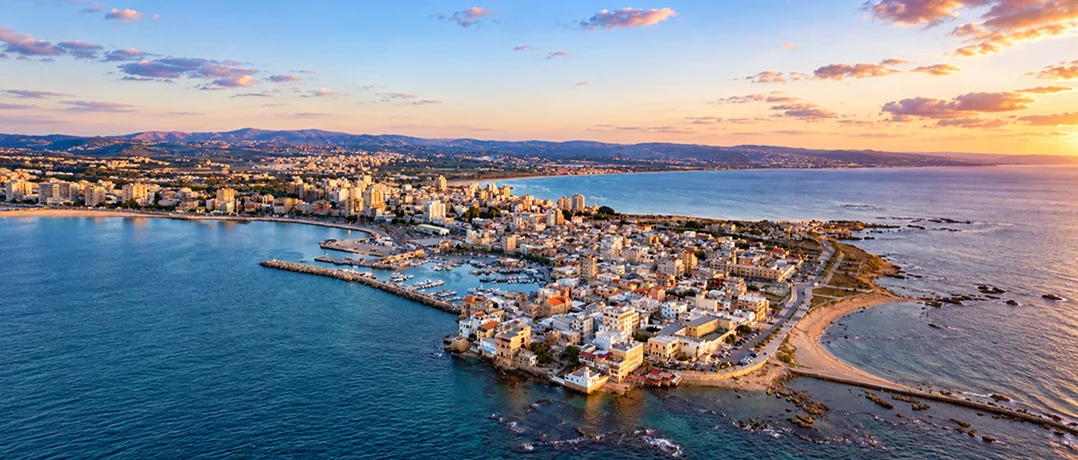
A city whose name has echoed through nearly five thousand years of human history, Tyre, called Sour in Arabic, is one of the oldest continuously inhabited settlements on Earth, and for over a thousand years it was arguably the most powerful port city in the ancient world. Today it is Lebanon's third-largest city, a UNESCO World Heritage Site, and a living fishing town where antiquity sits a few meters below the pavement.
From island rock to Phoenician roots
Tyre began modestly, as a mainland settlement called Ushu around 2750 BC, paired with a small, well-defended island just offshore. That island fortress, easy to defend, hard to besiege, became the real Tyre, and its name appears on monuments as early as 1300-1500 BC. The city's breakthrough came under King Hiram I, around 969 BC, when Tyre rose to become the leading city of Phoenician civilization. Phoenicia and Tyre are credited with major innovations in shipbuilding, navigation, and maritime trade, and Tyre's sailors, using two natural harbors protected by breakwaters and towers, built what amounted to a trading monopoly across the Mediterranean, exporting cedar wood, glass, textiles, and precious metals from trading posts that stretched the length of the sea. It was these Tyrian sailors who, in the ninth century BC, founded Carthage, the North African city that would later rival Rome itself.
Tyre also carved out a rare religious distinction, its craftsmen produced Tyrian purple, a dye extracted from local murex sea snails so labor-intensive and costly that it became reserved almost exclusively for royalty across the ancient world, the literal origin of "royal purple."
A city in scripture
Tyre occupies an outsized place in biblical history. King Hiram sent cedar and cypress wood, master craftsmen, including the renowned bronzeworker Hiram Abiff, and skilled laborers to help build Solomon's Temple in Jerusalem, a partnership that began under his father Abibaal and King David. Centuries later, the New Testament places Jesus in the region as well. It was near Tyre that he is said to have healed a Syrophoenician woman's daughter, according to the Gospel of Mark.
Tyre's island fortress, long considered unconquerable, met its match in 332 BC. When the city refused to submit to Alexander the Great, it withstood a grueling seven-month siege, one of the most famous in ancient military history. Alexander's engineers eventually built a causeway from the mainland to the island to bring siege engines within reach, a structure that, reinforced by centuries of silt, permanently transformed Tyre from an island into a peninsula. The city never fully returned to its old form; the land bridge Alexander built is the ground modern Sour still stands on.
Under Roman rule Tyre retained unusual autonomy as a "civitas foederata," a privileged allied city, and flourished again as a major port. It was during this era that the city acquired the monuments that still define its UNESCO site today, a triple-bay triumphal arch, an aqueduct carrying water six kilometers from the springs of Ras al-Ain, and the Tyre Hippodrome, at 480 meters long and 160 meters wide, the second-largest hippodrome in the ancient world and the best-preserved Roman circus after the one in Rome itself, once holding an audience of roughly 20,000 for chariot races.
Tyre's maritime power persisted all the way to the Crusades. Captured in 1124 during the First Crusade, it became one of the most important cities in the Crusader Kingdom of Jerusalem and the seat of an archbishop answering to the Latin Patriarch of Jerusalem, Tyre remained among the most powerful maritime cities in the Near East until the close of the thirteenth century, when Crusader rule in the region finally collapsed.
Ottoman centuries and modern Lebanon
Tyre passed through Mamluk and then Ottoman hands, and like much of the region endured recurring regional wars before the French Mandate period ended with Lebanese independence in 1943. In recent decades Tyre has weathered the Lebanese Civil War and periods of Israeli occupation in the south.
That continuity was tested again during the 2023–present Israel-Hezbollah conflict. Israeli strikes repeatedly hit areas immediately beside and inside Tyre's ancient archaeological zones. On 23 October 2024, a strike landed roughly 50 meters from the ruins, and the following day Israeli bombardment pounded large parts of the city; on 6 March 2026, a strike directly damaged the entrance of the UNESCO-listed Al-Bass site. Lebanon's culture ministry documented that falling debris and rubble struck columns, capitals, column bases, and ancient mosaics across the site, while a nearby house struck in an April 2026 attack damaged excavated artifacts and sent a stone fragment into a Byzantine-era structure. The Al-Bass site's own museum, still under construction, had its windows blown out by a nearby blast. Small blue-and-white Enhanced Protection Emblems, a designation under international humanitarian law, were posted at the ruins as a symbolic shield, largely without military effect.
UNESCO added Tyre's archaeological areas beyond the core World Heritage boundary to its List of Cultural Property under Enhanced Protection in November 2024, and Lebanon has continued to push for stronger emergency safeguards for Tyre, Baalbek, and other endangered sites as the conflict has continued.
Much of ancient Tyre, including most Phoenician-era remains, still lies buried beneath the modern city, which continues to grow directly on top of its own five-thousand-year foundation.
From the alphabet-trading sailors who seeded colonies across the Mediterranean to the purple dye that clothed kings, Tyre's story is really the story of how a small island rock became indispensable to the ancient world, and how a modern Lebanese city has managed to keep that inheritance alive rather than let it fade into myth.
-
-

-
Jenna GeageaReporter/Writer
-
