



At 19, Lebanese chef Jana Kaddouh is building her culinary identity between Lebanon and Canada, blending French technique, Lebanese roots and a drive to keep learning.
A Lebanese chef finds her voice between two kitchens
A Lebanese chef finds her voice between two kitchens
By Jenna Geagea | October 09, 2026

Reading time: 4 min
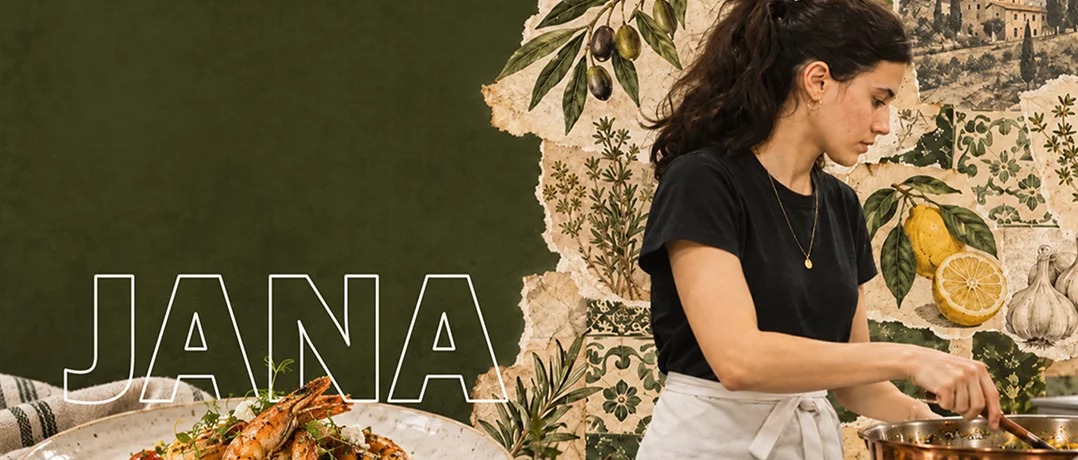
At 19, Jana Kaddouh is already navigating the unforgiving hours of a professional kitchen, a stack of immigration paperwork, and the slow work of deciding what kind of chef she wants to be. Born and raised in Lebanon and now cooking in Canada, she is building a career on French technique, curiosity and the flavours of home.
Cooking has been part of Kaddouh's life since childhood. "I grew up loving cooking. I used to ask for cooking books for my birthday," she told The Beiruter. The passion faded for a time, then returned during COVID. Her mother saw something worth nurturing and encouraged her to study cooking professionally.
She began her training in Lebanon, but soon wanted more. "I wanted to learn more techniques and gain more knowledge about things I hadn't been exposed to yet," she explained. That hunger led her to culinary school in Canada. There was no single turning point. "It was more of a gradual decision. The more I learned, the more I realized that I wanted to keep going."
Kaddouh's kitchen reaches well beyond the restaurant walls. On Instagram, she shares vlogs, day-in-the-life videos and candid talking-to-camera clips that show the journey as it happens, the long shifts, the doubts and the small victories. Her openness has struck a chord, drawing likes and comments from viewers across the world who are moved by her honesty and her story. It is a reminder of what social media can do for a young talent, giving her an audience, a community and a platform to be seen for who she is, long before any restaurant puts her name on a menu.
Finding her own style
Her early instinct in Canada was to rework Lebanese recipes into something more refined. She now sees that as a shortcut. "In a way, it was the easy way out because I already grew up with those flavours," she admitted.
She has since found a more personal approach, pairing the flavour combinations she knew from Lebanon with the techniques she was learning and the produce she was discovering. "With time, my identity as a chef is becoming clearer. I'm still working on it, but I know that both places have shaped the way I cook."
Today she cooks mainly French cuisine, drawn to technique and to "letting the ingredients speak for themselves." Traditional Lebanese dishes, though, she leaves untouched. "I'm not really into reinventing tradition just for the sake of it," Kaddouh maintains, preferring to keep those recipes "the way I grew up knowing them" while allowing their flavours to surface naturally in her own work.
Nor does she cook Lebanese food often. Canada's cultural variety has opened a new world to her. "Every time I get to try a new cuisine, I want to learn from it and eventually introduce something from that experience into my cooking." The influence, she added, can be subtle, “it doesn't always have to be obvious where a flavour comes from."
Her early months were humbling. "Everyone was more experienced, and even some of the produce we were using in class I had never seen before. There was just so much to learn."
The routine was relentless. "The schedule was almost like the military. It was tough mentally and physically." Students could stand for more than eight hours of class, barely eat, then head to work for another five to eight hours. "If your mind was tough enough to keep going, your body would eventually beg for rest."
The industry has not eased up. Closing one night and opening the next morning can mean barely five hours of sleep. "You learn very quickly that loving what you do doesn't mean your body won't get tired."
Her current schedule brings its own pressure. She holds one job, but her hours are unpredictable: some weeks exceed 40, others fall below 24. "Which is quite hard when you have fixed costs," she noted. "It's stressful not knowing how much I'll be making that month and if it will be enough."
Home offers little relief. "I try to escape the stress when I get home, but I end up cooking to feed myself anyway, which can be another three hours of standing." Her verdict on the glamorous image of the profession is blunt: "A lot of the job is simply showing up, standing for hours, doing it again the next day and somehow finding the energy to keep going."
Obstacles beyond the kitchen
Her heritage has not been an issue with colleagues. Her immigration status has weighed far more heavily. "My legal documents have taken most of the spotlight," she explained. “It's challenging to run after paperwork when you're 19 years old and don't even know if you'll still be able to stay here in three years."
Gender has played a part too. "When I'm confident, I can be called stuck-up. If I know what I want and try to communicate it with the team, I can be seen as being too full of myself." There has also been teasing about her voice and her grammar mistakes, though she dismisses it: "Nothing I can't push through. I've learned to keep doing my job and not let those things define how I see myself."
Her ambitions point outward rather than toward a single dining room of her own. "My ultimate goal for now is to travel and work in different countries, get more techniques under my belt and work in more Michelin-starred restaurants."
A restaurant of her own is not necessarily part of that picture. She would rather "have the freedom to travel and cook my own menu in different countries, have more people try my food and get to know me as a chef."
The destination remains open, and she is comfortable with that. "I'm still figuring out exactly where this journey will take me, but I know I want to keep travelling, cooking and learning. For me, the idea of being able to take my food somewhere new and share it with people is much more exciting than being tied to one place."
-
-

-
Jenna GeageaReporter/Writer
-
