



Two Lebanese collectors preserve the country’s history through decades of newspapers, safeguarding stories, headlines and everyday memories that might otherwise disappear.
Paper memory, Lebanon’s newspaper collectors

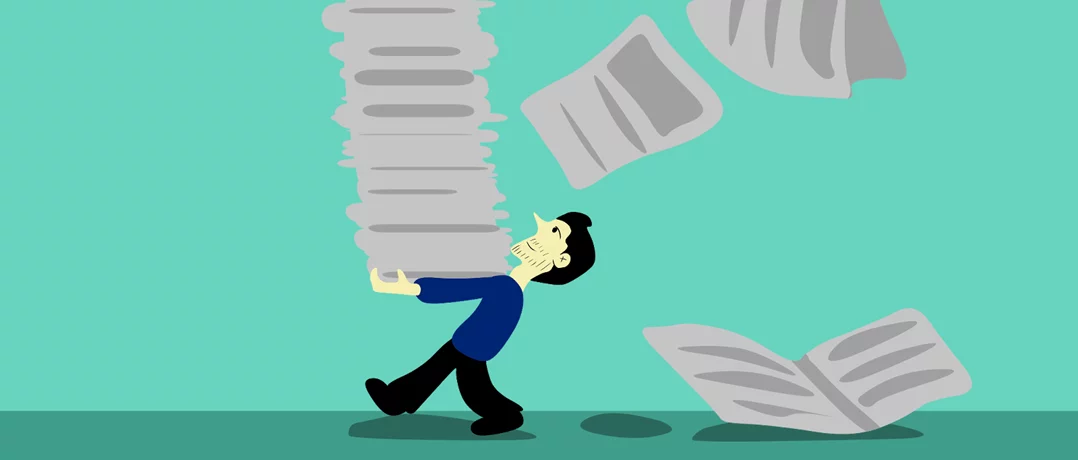
In Lebanon, where history is often contested, collectors have chosen to keep it in print. Their shelves hold the first drafts of Lebanon's story, written by the journalists who lived it as it unfolded.
Rabih Geagea and Karine Bou Chabke have never worked together, yet their collections trace the same arc. Both stretch from the earliest Beirut presses to the papers that have folded or shrunk in recent years. Lebanon's press is among the oldest in the Arab world.
Hadikat al-Akhbar appeared in 1858, and Lisan al-Hal followed in 1877. An-Nahar arrived in 1933, and L'Orient and Le Jour eventually joined to become L'Orient-Le Jour. Each title left behind paper that someone could choose to keep, and these two people did.
Rabih Geagea: Inheriting a habit
Rabih traced his obsession to his grandmother's kitchen. She never threw out a newspaper because she believed a printed page deserved more respect than the trash.
"She used to stack them beside the stove, and I was the child who read them instead of playing outside," he recalled. "By eleven, I knew the names of ministers who had not held office in years."
When she died, the stacks passed to him, and what began as inheritance turned into pursuit. He now owns several hundred issues, ranging from brittle weeklies of the mid-twentieth century to glossy magazines of the 1960s, when Beirut styled itself the intellectual capital of the region. He hunts them in flea markets, estate clearances and the back rooms of old print shops.
His proudest find, he noted, is a bound volume of Al-Hawadeth, the weekly magazine whose photographs and political cartoons defined an era. Its cover colors remain almost startlingly vivid. Beside it sits an early issue of Annahar, its margins browned to the shade of weak tea.
Rabih handles each item with cotton gloves and stores it flat, away from sunlight. He admitted that his wife has complained about the smell of old ink in their apartment.
"People assume I collect nostalgia," he expressed. "I collect evidence. A newspaper cannot rewrite itself afterward. It shows what people knew on that particular morning, and what they feared."
What surprised Rabih most were not the front pages but the back ones. Page after page of 1970s classifieds, tightly set in columns, listed vacancies for typists, drivers, bookkeepers and engineers. "I used to skip right past them," he explained. "Then I realized this was how people actually found their living."
He thought of his parents and grandparents, who had told him how a job once began with a newspaper spread open on the kitchen table and a pen circling the lines. "There was no website to refresh and no recruiter to call you," he recalled. "You bought the paper at dawn, you read the ads before anyone else in your street could, and you showed up at the door with your letter in hand."
He paused over one yellowed column and added, "Behind every one of these little notices is a family waiting to find out whether the month would be easier."
Karine Bou Chabke: The box her grandfather started
Karine’s collection has a precise starting point. When the Civil War began in April 1975, her grandfather started setting aside every paper that reported it.
"He told my father it was the kind of thing future generations would deny ever happened," she recounted. "So he kept everything, issue by issue, in cardboard boxes under his bed."
The boxes passed to her after his death. She has since added to them without interruption, so the archive now runs from the opening weeks of the conflict to the present day. Among its contents are editions of An-Nahar, As-Safir, Al-Anwar and L'Orient-Le Jour, many printed on thin newsprint that has gone yellow and soft at the folds.
The papers from the war years carry their own scars. Some pages bear ink smudges from rushed print runs, while others have creases from being carried through checkpoints. Several issues, she pointed out, appeared with columns of text cut away or reduced to blank space after censors intervened.
"You can feel the fear in the layout," she described. "The headlines are sharp, but the paragraphs underneath are cautious."
She has also kept the editions that marked later shocks, the assassination of Rafik Hariri in 2005, the final printed issue of As-Safir in 2016, and the front pages that followed the Beirut port explosion in August 2020. She keeps them in acid-free sleeves and labels each box by year.
Offers to buy the collection have come, though she hesitates to talk about them. She admitted she has wondered whether to sell.
"Some days I think a university or a museum should have it," she reflected. "Then I open a box, and I cannot do it. For now, they stay close to me."
What the paper holds
A digital archive cannot replace what they own. Screens refresh, headlines are corrected and stories vanish. A printed page does none of this. The advertisement for a cinema, the obituary beside the political column and the price of bread in a corner box all remain exactly where the editors placed them.
Lebanon has endured war, financial collapse and sudden catastrophe, and its people have often been asked to move on faster than memory allows. Collectors resist that pressure. By keeping the papers, they keep the record of what was reported, what was hidden and what ordinary readers carried with them through the day.
For both, the thrill of the collection lies in holding a moment that cannot be edited. Each issue is a witness. Someone wrote it down so we would not forget.
-
-

-
Jenna GeageaReporter/Writer
-
