



Lebanon's public schools face a growing crisis as thousands of teachers remain unable to return to work, while plans to open afternoon classes for Syrian students have sparked a nationwide strike and demands for answers.
Lebanese students wait as Syrian afternoon classes get green light
Lebanese students wait as Syrian afternoon classes get green light
By Natalie Durham | October 15, 2026

Reading time : 4 min
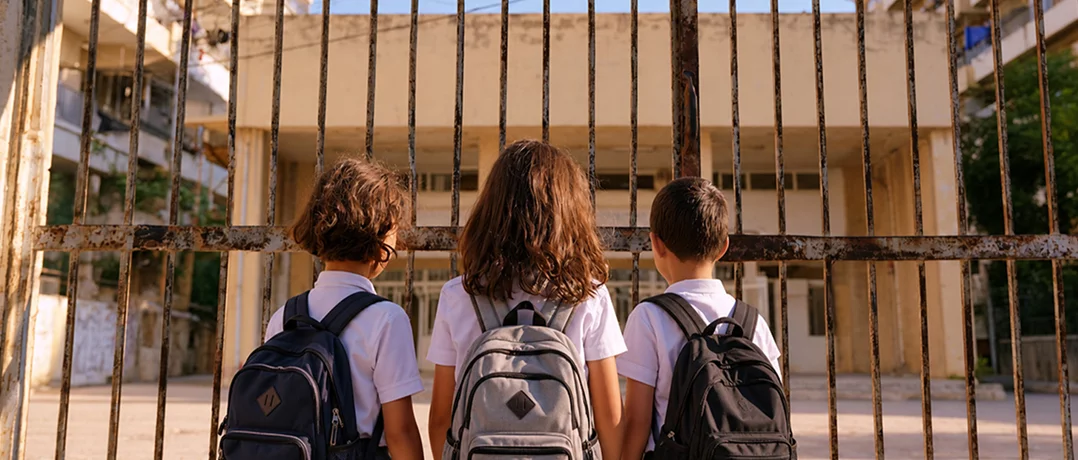
Nearly a month after the academic year began on September 15, Lebanon’s public schools are still struggling to operate normally, with thousands of contract teachers unable to return to work and many Lebanese students missing regular classes.
Meanwhile, the Ministry of Education's decision to move forward with afternoon classes for Syrian students has sparked objections from the Public Basic Education Teachers' Association, leading to a nationwide strike and raising questions about the ministry's priorities.
Syrian afternoon classes while Lebanese students wait
In an interview with The Beiruter, Dr. Hussein Jawad, President of the League of Public Basic Education Teachers' Association, explained why the association opposed the decision to open afternoon classes for Syrian students while some Lebanese students remain without regular schooling.
According to Jawad, a decision was issued on October 14 calling for Syrian students to begin afternoon classes that same day. The association immediately objected, arguing that Lebanese students should not remain without regular schooling while afternoon classes move forward.
We will not accept afternoon students receiving an education while Lebanese students in the morning shift still do not have their teachers
He explained that between 3,500 and 4,000 teachers have still not been authorized to return to their classrooms because the Ministry of Education is conducting assessments to determine whether schools need them.
For the past month, the association has repeatedly contacted the ministry seeking a decision. "Every time we ask the ministry, they tell us in two days, at the end of the week, or next week. A month has passed, and we are still waiting," Jawad said.
He stressed that the association's position is clear: Lebanese students must be able to attend regular classes before the ministry proceeds with afternoon teaching.
Lebanese students first, and then teach whoever you want to teach
Schools operating without enough teachers
Jawad explained that the problem extends across public schools in Lebanon, although its impact varies from one school to another. In some schools, students in grades one through six have returned, while those in grades seven, eight and nine have not yet been called back. Other schools have opened their classrooms but provide only three or four teaching periods per day.
It is rare to find a school where all students and teachers have returned and classes are operating normally
According to him, schools that have managed to operate normally are generally those that do not depend on teachers paid through school funds or supported by international donors.
He also explained that donor countries had decided to stop financing approximately 1,500 teachers, leaving the Ministry of Education responsible for their salaries.
The ministry subsequently began reviewing staffing needs to determine whether these teachers should continue working.
The same teachers could teach in the afternoon
One of Jawad's main concerns is that teachers who are currently prevented from teaching Lebanese students in the morning could be assigned to teach during the afternoon shift.
He described this situation as particularly troubling.
The same teacher I am preventing from entering the classroom in the morning is the brought back to teach in the afternoon. That is the shameful contradiction
Jawad explained that he had initially understood the ministry's decision to review teacher contracts. He believed the process could ultimately benefit teachers by placing their contracts directly under the responsibility of the Lebanese state, even if it meant waiting an additional month.
However, he said his position changed when the ministry moved forward with afternoon classes before resolving the morning-shift problem.
Jawad also warned that the situation could create tensions among parents.
Imagine a school where a Syrian student comes to learn in the afternoon while a Lebanese student cannot learn in the morning. Who would accept that?
He said he had personally warned Education Minister Rima Karami that parents might object and that the ministry's decisions risked creating unnecessary tensions between families.
Teachers threaten further strikes
The association announced a strike on October 15 covering public schools operating both morning and afternoon shifts. Jawad said the action was intended to pressure the Ministry of Education to complete its assessments and allow the remaining teachers to return to work.
He warned that the association would not accept afternoon classes proceeding while Lebanese students continued to face disruptions in their education.
If the ministry does not begin issuing the necessary teacher-assignment decisions by Monday, October 19, Jawad said he would recommend stronger measures to the association's administrative board.
We may not limit ourselves to one day of strike
-
-

-
Natalie DurhamResearcher/Writer
Junior research writer focusing on politics, public policy and international affairs.
-
