



Lebanon marks the International Day for the Eradication of Poverty as rising costs, unemployment and successive conflicts deepen hardship and threaten millions’ ability to meet basic needs.
Poverty and Lebanon’s struggle to live with dignity
Poverty and Lebanon’s struggle to live with dignity
By Jenna Geagea | October 15, 2026

Reading time: 4 min
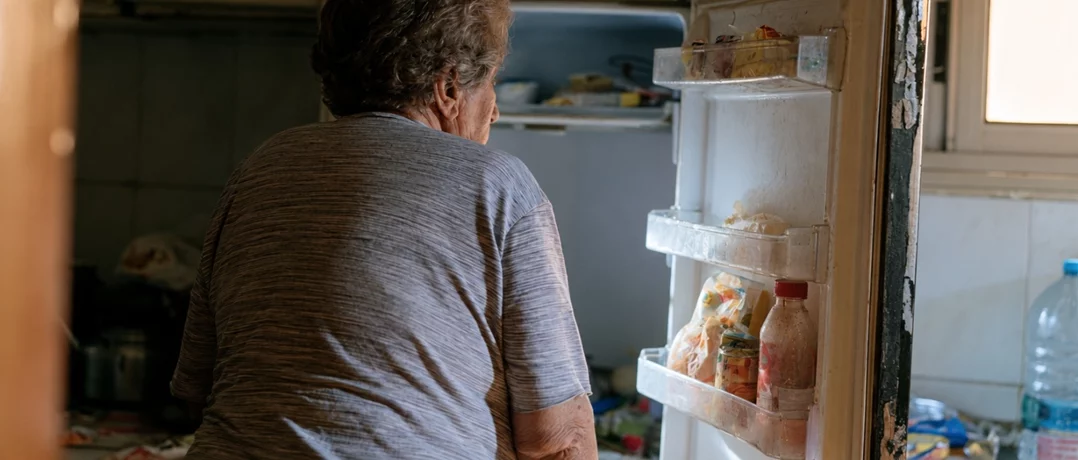
Lebanon marks the International Day for the Eradication of Poverty. The country’s escalating cost-of-living crisis and growing poverty continue to derail its fragile economic recovery, fueling concerns over social unrest as inflation rises and the consequences of successive wars continue to weigh on the country.
UNICEF reports that four in five surveyed households struggle to afford basics. The IPC projected 1.24 million people in crisis-level hunger this spring and summer. The ILO found one in three private-sector workers jobless by May. All of it lands on a population that was already, by the World Bank's count, 44 percent poor.
Lebanon’s food inflation has averaged 20% this year, with monthly increases of around 2%, as food insecurity and poverty continue to worsen. According to the World Bank, approximately 1.24 million people are expected to face crisis or emergency levels of food insecurity in 2026, up from 874,000 in 2025, with South Lebanon and Nabatieh among the hardest-hit areas.
The escalation of hostilities in spring 2026 has further weakened household living conditions, leaving displaced families increasingly reliant on informal support networks and dwindling savings. Rising private generator fees, strained public finances and the country’s estimated financial loss gap of more than $70 billion are adding to the pressure, while successive rounds of fighting since autumn 2023 have caused more than $27 billion in economic and reconstruction-related losses.
How poor is Lebanon?
A 2025 study by economists at LAU and the University of Ottawa, using alternative data because household surveys are scarce, put poverty at 60 percent or more. Save the Children's July 2025 resilience baseline cites a similar figure of about 60 percent, with rates above 70 percent in Akkar and Baalbek.
GDP grew an estimated 4.2 percent in 2025, and the World Bank estimates poverty among Lebanese eased from about 37 to 36 percent in the surveyed governorates after peaking in 2024. But inflation still ran at 14.6 percent, rents rose 27 percent and education costs 38.8 percent, and household welfare barely improved. The economy remains roughly 40 percent below its 2019 size, and the pound has lost about 98 percent of its value.
Hostilities resumed on 2 March. The World Bank now projects a 6.4 percent contraction in 2026 and 17.5 percent inflation; by June, transport costs were up 29.5 percent and utilities 25.3 percent. More than a million people were displaced at the peak, and over 340,000 were still displaced in mid-September, mostly outside shelters. The health ministry counts 4,387 people killed by 11 October. In the south alone, UNDP and CNRS found 11,095 buildings destroyed by late April, with about $1.38 billion in direct damage, on top of the $11 billion in needs left by the 2023-24 war.
Despite the ongoing conflict, Lebanon recorded a public finance surplus of $1 billion, equivalent to 2.5% of GDP, through the end of May, marking a 32% year-on-year increase. The improvement was driven by a 26.6% rise in government revenues, particularly fuel excise taxes, while public spending increased by 23.7% amid higher salaries, healthcare costs and conflict-related expenses. Meanwhile, prices for water, electricity, gas and other fuels rose 25.3% year-on-year, and transportation costs climbed 29.5% by midyear. The World Bank attributed the Lebanese pound’s stability against the US dollar to tight local-currency liquidity. However, Banque du Liban’s foreign currency reserves declined to $11.6 billion in mid-August, covering approximately 6.6 months of imports, down from $12.1 billion in mid-February.
Hunger and work
The IPC estimated 1.24 million people (about 24 percent) in Phase 3 or worse from April to August, up from 874,000 earlier, with 55 to 65 percent affected in the worst areas. An ILO survey of 2,485 private-sector workers found 33 percent no longer working in May: 76.5 percent in Nabatieh and 43.2 percent in the South. Average labor income fell an estimated 40.4 percent. Workers with disabilities (71.4 percent), women (44.3), youth (42.4) and Syrian refugees (39.4) fared worst. Before the war, the last labor force survey (2022) showed unemployment of 29.6 percent, and about 65 percent of workers have no social protection.
UNICEF's 30 September report found that 22 percent of households said children had gone to bed hungry, 31 percent said a child missed needed health care, and 14 percent had a child working, more than double the share in January 2025. Some 436 schools were damaged or destroyed, putting about 100,000 children at risk of having no classroom, and 17 percent of households said a child had stopped attending school. An estimated 770,000 children are in psychological distress.
Poverty is deepest among refugees. LCPS found that among people who received war-related help, 52 percent got it from political parties and 13.9 percent from the state. The 2026 Flash Appeal ($639.9 million) was just over half funded by early autumn.
The people of Lebanon struggle to remain afloat, as poverty remains one of our deepest unresolved crises. Families lost their homes, children went hungry, and millions struggled to meet basic needs. The challenge is recovery that ensures that people can live with dignity.
-
-

-
Jenna GeageaReporter/Writer
-
