



Beirut’s fashion scene reflects the ambitions of young designers striving to turn their creativity into successful businesses amid the challenges of a demanding industry.
Fashion between passion and profit

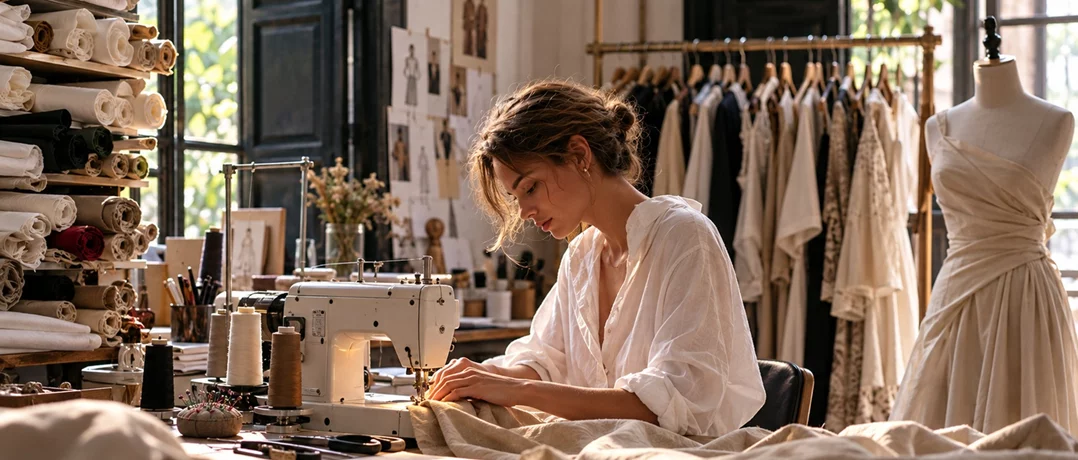
Beirut has long been a city defined by fashion, trends and lifestyle, where personal style is part of the city’s spirit. For many young women, this environment offers the inspiration to turn a passion for fashion into something of their own, launching clothing brands that bring their creativity and artistry to life. Yet behind the designs, fabrics and ambitions lies the challenge of building a business in a difficult industry.
Dressing the Lebanese woman
Jennifer Bou Eid traced her devotion to fashion to early childhood. “Ever since I could walk, I’ve always had an interest in art, and I’ve been naturally drawn to fashion,” she told The Beiruter. Her school imposed no dress code, and the freedom turned each morning into a creative exercise. “I would pick out an outfit the night before school, only to change my mind the next morning and put together a completely different look,” she recalled. Launching a label was the natural next step, “a way for me to turn something I had loved my entire life into something of my own.”
She built the brand around a particular muse. “My vision was to create pieces that live up to the standards of the Lebanese woman, someone who is known for always being put together, effortlessly chic, and paying attention to every detail,” she explained. She wanted garments a customer would “keep in her wardrobe for years to come,” and she rejected the logic of the trend cycle. “For me, Comme La Brune is about creating pieces that have character, that make a woman feel confident, and that she can return to season after season.”
She also chose to manufacture at home. “Lebanon has so many incredibly talented artisans, and some of the most renowned designers in the fashion industry are Lebanese,” she noted. “I am beyond proud to say that I produce my designs here in Lebanon.”
Her biggest hurdle was skepticism. “Unfortunately, one of the hardest parts nowadays is building customers’ trust,” she lamented. Many shoppers had received products that bore little resemblance to their online photographs, and honest sellers absorbed the consequences. “You sometimes have to work twice as hard to convince customers that what they see is exactly what they will receive,” she explained. She blamed weak enforcement, pointing to “the lack of clear and properly enforced laws and regulations addressing misleading advertising and consumer protection.”
The strategy paid off. Customers who opened their parcels were often “pleasantly surprised that the product looks and feels just as beautiful in person as it did online,” she noted. Many became loyal buyers who recommended the label to others.
Her ambitions crossed borders. Her up-and-coming brand advertised internationally through social media, partnered with influencers and offered express worldwide shipping. “I believe that having a strong online presence allows Lebanese brands to reach a much wider audience and showcase the creativity and craftsmanship that our country has to offer,” she argued. She conceded, however, that “building an international customer base takes time, consistency, and investment.”
Instability shadowed every step. War, Bou Eid explained, disrupted supply chains, “importing fabrics can become extremely difficult when shipments are disrupted due to war and regional instability, which can delay production and affect the entire process of bringing a collection to life.” It also reshaped shopper priorities, as “shopping, going out, and spending on non-essential items become less of a priority.” Smaller brands that relied on steady sales took the heaviest blow, and deliveries sometimes became impossible. On that point she was unequivocal: “the safety of delivery drivers must always come first.”
Still, she credited her endurance to conviction. “What keeps me going is my passion for what I do and my belief in the potential of Lebanese creativity and craftsmanship,” she affirmed.
A passion that could not pay for itself
Natasha Rahal’s love of fashion grew from a more analytical curiosity. “I have always been interested in clothes, how they are designed, how different fabrics work together and how an outfit can completely change the way someone feels,” she explained. For years it remained a private passion. Then, in 2024, she decided to go further. “I wanted to create a brand that reflected my taste and my vision rather than simply reselling clothes that already existed,” she told The Beiruter. She wanted to be involved in “the entire process, from choosing the fabrics to developing the designs and seeing the final pieces come to life.”
She also sensed a gap in the market for “pieces that women could wear for nights out and special occasions.” Her designs targeted dinners, evenings with friends and celebrations, and she insisted on controlling every detail. “The fabric, the silhouette and the way everything came together mattered to me,” she stressed. “I did not want to compromise on the design simply to get a product out as quickly as possible.”
She hired a tailor and a established a production setup, and discovered how much negotiation stood between sketch and garment. “There was a lot of back and forth,” she recalled. “You might have a very clear idea in your head, but when you start working with fabric, you realize that certain things need to be adjusted.” Fit, quality and finishing all demanded attention.
An online model spared her the rent of a boutique, but not the bills. “You do save on certain expenses, but that does not mean the business is inexpensive to operate,” she cautioned. Materials, tailoring and production all required cash. “When you are working on original designs, you cannot simply separate the creative side from the financial side. Every decision has a cost attached to it.”
Over time, the numbers turned against her. “My production costs became much higher than my sales revenue” she admitted. Raising prices offered no escape, because
“you have to consider what customers are willing to pay, especially when you
are a new brand that is still trying to establish itself.” She also could not
simply switch to cheaper materials without compromising the result, and she
found herself weighing questions far removed from design: “Is this piece worth
producing? Can I sell it at a price that covers the costs?”
She explored restructuring, but concluded that “you cannot ignore the basic
costs of making the clothes.” In 2026, she closed the brand. “You cannot keep
putting money into a business without knowing whether it will eventually become
sustainable,” she reasoned. The decision hurt. “It was disappointing, but I
also knew that I had to be realistic about what I could afford.”
She refused to label the outcome a failure. “I loved the creative process,
but I had to recognize that loving fashion was not enough to make the business
work financially,” she reflected. She gained practical knowledge about product
development, production partners and finance, and learned that “having a good
idea and being able to turn it into a sustainable business are two different
things.”
Fashion is both an art and an enterprise, and neither survives alone. It is
wonderful to have a creative idea and the courage to pursue it, but you also
need a model that allows you to keep going.
-
-

-
Jenna GeageaReporter/Writer
-
