



President Joseph Aoun and Prime Minister Nawaf Salam’s visits to southern Lebanon and Tripoli signal a renewed effort to extend state authority and to address the needs of regions the state has long neglected.
Aoun and Salam’s visits : A turning point and a political message
Aoun and Salam’s visits : A turning point and a political message
By Natalie Durham | October 27, 2026

Reading time : 5 min
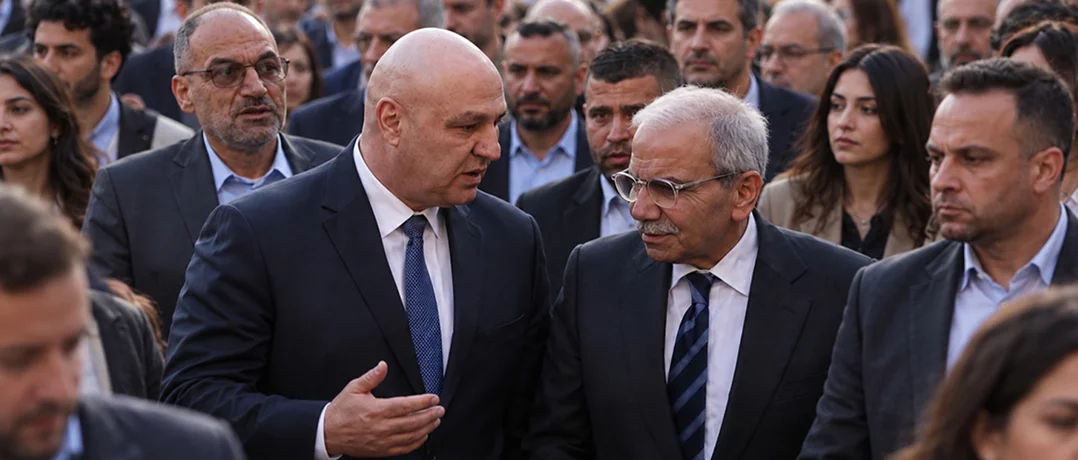
Lebanon’s President Joseph Aoun and Prime Minister Nawaf Salam have been touring Lebanon’s regions, from the South to Tripoli. Both areas have long dealt with insecurity, economic hardship, and little government involvement.
Beyond the meetings with local officials and the promises of development, the visits raise political questions: what is the message behind it, and will the visits lead to a stronger state presence on the ground?
“The visits reflect a change in how the country’s leadership approaches the regions,” political writer and analyst Wajdi El Aridi told The Beiruter, adding: “the trips to the South and then to Tripoli confirm a new presidential and political approach, different from that of the previous period.”
Southern Lebanon: Reasserting state authority
Southern Lebanon is still at the center of the government’s effort to strengthen state sovereignty, with Israeli military activity continuing, reconstruction still needed, and the question of Hezbollah’s weapons unresolved.
El Aridi said Hezbollah’s influence in the South went well beyond its military presence.
The party controlled political, security, economic, and virtually all aspects of life in southern Lebanon
However, that has changed after successive military confrontations, the continued Israeli occupation of Lebanese territory, and the start of Lebanese-Israeli negotiations under American mediation.
According to El Aridi, international support for Lebanon is tied closely to whether the state can exercise sovereignty over its territory, especially in the South, and deal with Hezbollah’s weapons. “Salam’s repeated trips to the South have focused on the government’s responsibilities to local communities, mainly reconstruction and the deployment of the Lebanese Army,” he said.
The political analyst noted that Salam has visited the South about four times, including a stop in Nabatieh, where he called for rebuilding damaged areas and expanding the presence of state institutions.
President Aoun’s own visit to Nabatieh carried a sharper political message.
Aoun's visit to Nabatieh represented a turning point and carried more than one political message. Above all, it demonstrated that the Lebanese state had returned to the South and that no parallel state or authority could continue to exist alongside the Lebanese state
He described the visit as a direct message to Hezbollah and said that it had been coordinated at the highest levels with Parliament Speaker Nabih Berri and other officials.
For El Aridi, the aim is practical as well as symbolic: the Lebanese state is taking back its administrative, political, and security responsibilities in an area where its authority has long been challenged.
Tripoli: Reconnecting the state with neglected regions
The southern visits were mostly about security and sovereignty. The Tripoli visits, on the other hand, had more to do with politics and development.
Tripoli, often called Lebanon’s second capital, has struggled with economic hardship, political instability, and long-standing gaps in development. El Aridi argued that perceptions tying the city to extremism and insecurity have often overshadowed its importance and its history as a center of learning and scholarship.
Salam had already visited Tripoli to look at its economic and development needs, especially the Port of Tripoli and the Rashid Karami International Fair.
El Aridi pointed to the port’s commercial value and its capacity to receive large trading vessels, and said developing it would be an important opportunity for the city.
Aoun’s visit added a political dimension.
It confirms that just as the Lebanese state has returned to southern Lebanon, it intends to restore its presence throughout the country
He considered the visit especially significant because, as he recalls, about 15 years had passed since a Lebanese president last visited Tripoli.
The visit was also an attempt to build the state’s relationship with the city directly, beyond its traditional political leaders and partisan influence.
As Al Aridi said, Aoun’s stops at the port and the fair showed that the government plans to address Tripoli’s needs through stronger administrative institutions, economic investment, and development projects.
The state is the authority that must exercise its powers over Tripoli, just as it does in Beirut, the Bekaa, Saida, and every other Lebanese city
A broader political strategy?
Through these visits, Aoun and Salam are trying to show that the state is present across Lebanon and that no region should be left behind.
The political analyst expects this approach to continue and said more presidential and government visits may follow in other areas, possibly in the Bekaa. He also linked the visits to the government’s ministerial statement and Aoun’s inaugural oath, especially their commitments to sovereignty, institutional reform, and a stronger Lebanese Army.
There is also an international side. El Aridi argued that the international community is watching Lebanon’s efforts to strengthen state authority closely, and that real progress could bring more support for the Army and public institutions.
He tied the approach to wider reforms as well, including the Taif Agreement’s remaining provisions, administrative decentralization, and balanced development across the regions.
El Aridi sees the visits as the possible start of a new political phase, one whose direction may become clearer with upcoming constitutional milestones, particularly the parliamentary elections. "These visits primarily convey a political message to Hezbollah and to any other force or de facto authority operating outside the framework of the Lebanese state," he said.
From now on, the Lebanese state alone must be the authority exercising sovereignty and control over the entirety of Lebanese territory
-
-

-
Natalie DurhamResearcher/Writer
Junior research writer focusing on politics, public policy and international affairs.
-
