



Turkey has become a key venue for international diplomacy, but its own regional ambitions raise questions about the limits of its role as a mediator.
Why is Turkey becoming a hub for international relations?
Why is Turkey becoming a hub for international relations?
By Chris Van | November 01, 2026

Reading time: 13 min
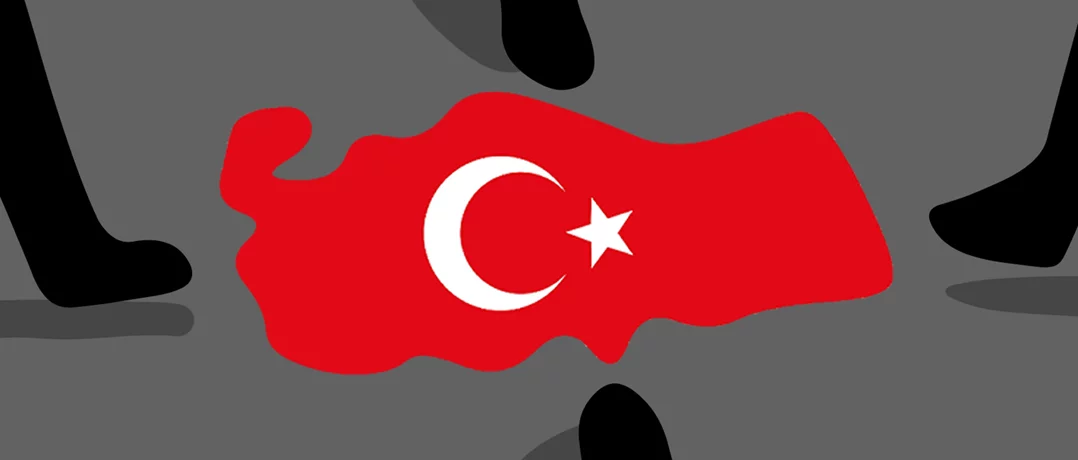
From Ukraine to Gaza, from Afghanistan to Syria, Turkey has become one of the places where the wars in its neighbourhood are negotiated. This longstanding ambition, which became doctrine under Recep Tayyip Erdoğan, brings Ankara visibility and influence. But the mediator is also a power with interests of its own, and this defines the limits of its role.
According to Reuters, the meeting took place in September, somewhere in Turkey. On one side were Syrian intelligence and diplomatic officials. On the other were representatives of Hezbollah, which fought for years alongside Bashar al-Assad. According to the news agency, Turkish security services had invited both parties. It would be the first known direct meeting between the new authorities in Damascus and the Shia party.
Reuters' sources describe a pragmatic exchange. Damascus reportedly assured Hezbollah that it would not intervene militarily in Lebanon to disarm the group. In return, it reportedly asked Hezbollah to help stem smuggling across the border and dismantle its remaining cells in southern Syria. Indirect contacts, through Turkey, had reportedly begun two months earlier.
Ankara categorically denied the reports. The Turkish presidency's Centre for Combating Disinformation described the suggestion that a meeting had taken place under the auspices of the intelligence services (MIT) as "completely unfounded". Damascus also denied the reports. Hezbollah did not comment.
Whether or not it took place, this meeting says something. In just a few years, Turkey has become the place where people come to talk when they are no longer speaking to one another. In 2022, Russian and Ukrainian ministers met in Antalya, followed by their delegations in Istanbul, before the Black Sea grain agreement. In 2025, Istanbul hosted three rounds of Russian-Ukrainian negotiations, followed by talks between Pakistan and the Afghan Taliban. Ankara is among the guarantors of the ceasefire reached in Gaza in October 2025. And last July, the Turkish capital hosted the NATO summit.
"It's a long-term strategy," summarises Pınar Akpınar, a professor at Qatar University and a specialist in Turkish mediation. A strategy with its successes and blind spots. And one fundamental limitation: a mediator that is also a regional power is never entirely neutral.
From "Zero Problems" to the "Peace Front"
Turkey did not discover mediation under Erdoğan. But it was after the AKP came to power in 2002 that the approach became systematic. According to Pınar Akpınar, three factors drove this shift: Ankara's foreign policy interests, the proliferation of crises spilling over onto its territory, and humanitarian motivations.
The architect of this approach was Ahmet Davutoğlu, an adviser and then foreign minister from 2009 to 2014, who theorised "strategic depth" and the policy of "zero problems with neighbours". At the time, Ankara was still negotiating its accession to the European Union and aligning itself with the European ideal of a peaceful neighbourhood. In 2008, it conducted four rounds of indirect talks between Syria and Israel, interrupted in December by the Israeli offensive on Gaza. In 2010, alongside Brazil, it secured an agreement with Tehran on a nuclear fuel swap, the Tehran Declaration. Washington immediately rejected it and pushed through new sanctions at the UN.
The Arab Spring upended everything. "Everyone's plans changed," says the researcher. Turkey became directly involved in conflicts, starting with Syria. "Zero problems" gave way to a more muscular policy: drones, an arms industry, and military bases abroad. Mediation did not disappear, however; its status changed.
"As a regional power, Turkey is diversifying its foreign policy instruments," analyses Pınar Akpınar. "There is a security front, where it invests in drones and hard power. And there is a peace front, where it invests in diplomacy and mediation, which gives it a greater say."
This second front has become institutionalised. In September 2010, Turkey and Finland launched the "Mediation for Peace" initiative at the UN, giving rise to the Group of Friends of Mediation. It now brings together 56 states and eight organisations, and met again in September in New York. Equivalent groups exist within the OSCE and the Organisation of Islamic Cooperation. Since April 2024, the Turkish Ministry of Foreign Affairs has even had a directorate-general for international mediation.
Researchers identified the project's ambivalence early on. As far back as 2010, Meliha Altunışık and Esra Çuhadar were asking whether Turkey was acting as a "neutral facilitator" or as a power mediator, bringing its full weight to bear on the parties. In 2017, Nimet Beriker showed that mediation offers middle powers, caught in unequal alliances, room for manoeuvre they would not otherwise have. In an article published in July 2026, Pınar Akpınar and Ahmet Erdi Öztürk contrast Qatari mediation, cautious and low-risk, with Turkey's more assertive approach, backed by its military power.
Talking to everyone
How can a NATO member retain the ear of Moscow and Tehran? For Pınar Akpınar, the answer lies first and foremost in geography. "The region where Turkey is located is very volatile, and it is caught between powerful actors": the European Union, Russia, Iran and Egypt. Balancing the powers is a longstanding state strategy, inherited from the Ottoman Empire. It is also a matter of dependencies. Turkey remains heavily dependent on Russian gas. In 2025, Russia was its second-largest supplier of goods, behind China. With Iran, the rule can be summed up in a saying: "You cannot go to war with Iran, you cannot be friends with Iran. You have to balance."
"Mediation is a very good tool for finding that balance," she continues. It allows Turkey to maintain relations with everyone without aligning itself with anyone. Above all, it provides access that others do not have: Turkey talks to Russia as well as Ukraine, to Hamas as well as Washington, to the Taliban as well as Pakistan. It has, Akpınar says, "access to actors that certain powers, such as the United States, do not have access to, particularly non-state actors".
The negotiating tables of Istanbul
The Ukrainian dossier remains the showcase. On 10 March 2022, two weeks after the Russian invasion, Ankara brought together ministers Sergei Lavrov and Dmytro Kuleba in Antalya. In late March, the delegations met in Istanbul. On 22 July, Turkey and the UN secured the Black Sea grain agreement, overseen by a coordination centre established in Istanbul. For a year, until Russia's withdrawal in July 2023, Ukrainian cargo ships passed through the Bosphorus.
In 2025, Istanbul hosted three rounds of direct negotiations, the first since 2022. They resulted in large-scale prisoner exchanges, but no ceasefire. On 23 September, in New York, Erdoğan offered to host a summit of leaders. Volodymyr Zelensky said he was "very open" to the idea. In the meantime, in August 2024, Turkish intelligence services had coordinated the largest prisoner exchange between Russia and the West since the Cold War in Ankara: 26 people were released.
"Turkey intervenes mainly in its own region, and according to its foreign policy priorities," Pınar Akpınar points out. Somalia, where Ankara maintains its largest overseas military base, is one such priority. So is Syria. Since Assad's fall in December 2024, Ankara has been one of the main backers of President Ahmed al-Sharaa. This is what makes its role between Damascus and Hezbollah plausible in the eyes of Reuters' sources: it is seeking to position itself as Syria's main stabilising force.
The record consists of few peace agreements and many partial results. The researcher acknowledges this: "When you sit at the table as a mediator, it does not mean that you are going to resolve every conflict, nor that every process will lead to a comprehensive peace agreement. Sometimes, it translates into small victories, such as hostage agreements or prisoner exchanges."
Diplomatic tourism and indulgence
The first benefit is visibility. "Istanbul is more of a cultural hub and Ankara a diplomatic hub," summarises Pınar Akpınar. But the roles are becoming blurred: Istanbul is hosting more and more negotiations and conferences, and a third city has entered the circuit. The Antalya Diplomacy Forum, whose fifth edition took place from 17 to 19 April, brought together more than twenty heads of state and government, delegations from more than 150 countries and nearly 5,000 guests.
The NATO summit, held on 7 and 8 July in Ankara, took this logic to its conclusion. Erdoğan welcomed the fact that Ankara had "increased its international visibility more than ever", and saw it as a boon for tourism. "That was a little excessive, in my opinion," Akpınar says. "But they use it to promote Turkey."
Ankara is not alone in this field. Every December, the Doha Forum plays the same role for Qatar. "More and more countries in the non-Western world are hosting major diplomatic events and using them as instruments of soft power," notes the researcher.
The second benefit is consideration from the major powers. A useful mediator is an ally that others are careful not to alienate. In September 2025, Erdoğan was received at the White House for the first time in six years, with progress on F-35 fighter jets, US sanctions and the Halkbank case. The Moshe Dayan Center in Tel Aviv notes that Washington has remained largely silent on the repression targeting the CHP, the main opposition party, since the arrest of Istanbul's mayor, Ekrem İmamoğlu, in March 2025.
Mediation forms part of a broader arsenal: television series exported throughout the Arab world, scholarships to attract students, and religious influence through the Diyanet, the Directorate of Religious Affairs. Yet Islam is not the driving force, Akpınar insists. Turkey promotes a "moderate" Islam and is wary of radicalism, perceived since the Ottoman era as a threat to the state. In choosing which countries to assist, "ethnic ties have always mattered more than religious ties", as demonstrated by investment in the Turkic countries of Central Asia.
An apparent paradox remains. Turkey cultivates its image as an attractive country, a popular Erasmus destination and a producer of successful television series, while tightening its domestic policies, from the arrests of opponents to pressure on the LGBTQIA+ community. For Akpınar, there is no contradiction: "Why couldn't authoritarianism and 'cool' go together? I live in Qatar, an officially authoritarian country, and it's a cool country. Its entire foreign policy is based on mediation." She clarifies: "I'm not saying that I'm in favour of authoritarianism. Of course, I'm in favour of democracy. But the two can coexist."
A mediator is judged on its results, not its constitution. And the services it provides earn it a certain degree of indulgence.
Almost everyone
Ankara can talk to almost everyone. Almost. With Israel, the rupture dates back to the winter of 2008–2009. The Syrian-Israeli talks ended with the offensive on Gaza. A few weeks later, in Davos, Erdoğan delivered his famous "One minute" to Shimon Peres and walked off the stage. The scene made him a hero in the Arab world. It disqualified him as a mediator in Israel's eyes.
Since 7 October 2023, the divide has widened. Israel refuses to allow any Turkish soldiers to take part in the planned stabilisation force in Gaza, even though Ankara is a guarantor of the ceasefire. In April, Istanbul prosecutors indicted Benjamin Netanyahu and 34 other Israeli officials following the interception of a flotilla bound for Gaza. In June, Erdoğan compared Netanyahu to Hitler; the Israeli prime minister responded by calling him an "antisemitic dictator". In August, Israel bombed the Abu al-Duhur airbase in Syria, suspecting Turkey of planning to establish a presence there. US envoy Tom Barrack is now advocating a deconfliction mechanism between Turkey, Syria and Israel. The mediator itself needs a mediator.
Pınar Akpınar describes a "cautious policy". "If Israel ever decides to make peace in the region, Turkey will always be ready." She also points out what protects Ankara: "Turkey is a NATO ally. It is not Iran, it is not Yemen or Lebanon."
The peace front and the war front
The war against Iran revealed a second limitation. When the United States and Israel struck Iran on 28 February, Turkey found itself in the middle of the conflict. NATO defences intercepted Iranian missiles heading towards its territory on 4, 9 and 13 March. Ankara relayed messages between Washington and Tehran. But it was Pakistan that secured the April ceasefire and hosted the Islamabad talks. When the truce collapsed in July, messages passed mainly through Doha.
The same phenomenon can be observed in Ukraine. When Washington took the lead again, the 2026 trilateral negotiations between Americans, Ukrainians and Russians took place in Abu Dhabi, then Geneva. Istanbul remains a standing offer, not an obligatory stop. And competition is fierce: Doha, Abu Dhabi, Riyadh, Islamabad and Muscat are all vying for the same role.
Above all, Turkey is not merely a mediator. On 7 August, in Mecca, Erdoğan signed a mutual defence pact with Saudi Crown Prince Mohammed bin Salman and Pakistani Prime Minister Shehbaz Sharif: any attack against one of the three would be considered an attack against all. Tehran officially welcomed the agreement in the name of Muslim unity.
According to several analysts, Ankara and Islamabad had until then been reluctant to sacrifice their role as mediators in the war against Iran. The peace front and the security front described by Akpınar complement each other as long as they do not intersect. When they do, a choice must be made.
The Caucasus
In the Caucasus, Turkey is not a mediator: it is a party to the conflict. With Azerbaijan, the saying goes: "One nation, two states." The Turkish-Armenian border has been closed since 1993, in solidarity with Baku during the Karabakh war. "The reason for the closure was not the genocide, it was Karabakh," Pınar Akpınar insists.
Since 2022, normalisation has progressed in small steps: special envoys, direct flights between Yerevan and Istanbul, and, this summer, the start of restoration work on the Kars-Gyumri railway on the Turkish side. But the border remains closed, and Turkish officials link its reopening to normalisation between Yerevan and Baku.
Akpınar sees this as a very positive development: "You cannot wait until all the problems are resolved before starting to cooperate. It is cooperation that brings peace." On the Armenian side, the path is narrower. Nikol Pashinyan, the architect of the rapprochement, won the 7 June parliamentary elections with 49.7% of the vote, against an opposition highly critical of his concessions to Ankara and Baku. For a large part of Armenian society and its diaspora, recognition of the 1915 genocide remains a prerequisite. Turkey can reopen railway lines. It cannot continue to turn a blind eye to a genocide for which it bears full responsibility.
A crossroads, not a sanctuary
Can Turkey become a new Geneva? The question initially amuses Pınar Akpınar. Then she offers a formulation: Geneva would be the diplomatic hub of the West, Ankara that of the non-Western world, "or the bridge", as Turkey is often described.
The comparison, however, has its limits. Geneva owes its role to Swiss neutrality, that of a state with no direct interest in the wars it hosts. Turkey owes its role to the opposite. It is involved everywhere, and that is precisely what gives it access and leverage. Its strength and its limitation are one and the same: it is listened to because it carries weight, and it is distrusted because it has interests of its own.
Seen from Beirut, this ambivalence is far from abstract. On 10 June, before Parliament, Erdoğan declared that "Damascus and Beirut are two sister cities of Istanbul" and that "Turkey's security begins in Aleppo, Damascus and Beirut". On the Israeli front, Ankara carries little weight: it was Washington that negotiated the Lebanese truce in April. On the Syrian front, it may be the only power capable of bringing Damascus and Hezbollah into the same room, if that meeting did indeed take place.
Turkey will probably never become Geneva. It is becoming something else: a place where wars are negotiated under the watchful eye of a power that almost always has a stake in their outcome.
