



The Lebanese Army is expanding its presence across southern Lebanon, but Israeli military activity, unresolved withdrawal arrangements and Hezbollah’s weapons continue to challenge state control.
LAF expands in south as full control remains elusive
LAF expands in south as full control remains elusive
By Michael Al Andary | October 31, 2026

Reading time: 6 min
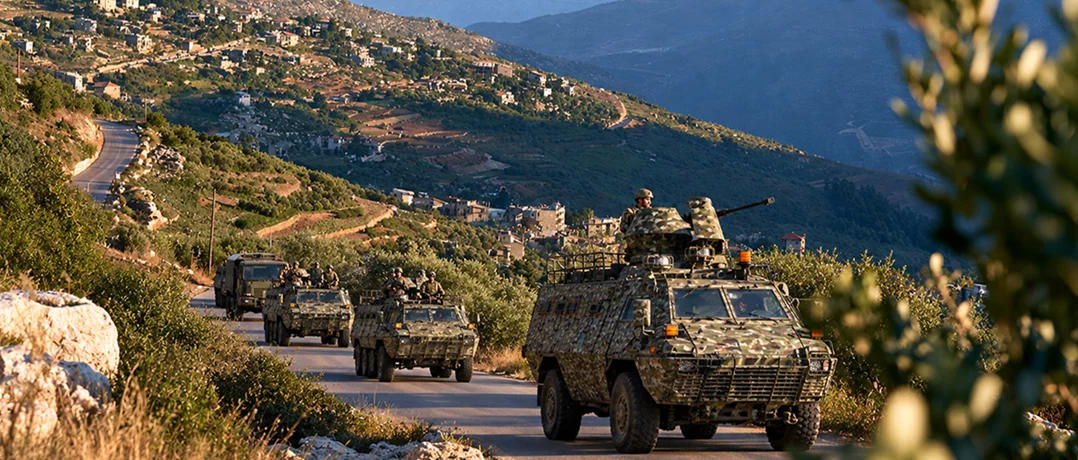
The security situation in southern Lebanon has changed considerably since the outbreak of war between Israel and Hezbollah, which escalated after the pro-Iranian group opened its so-called “support front” in backing Hamas following its October 7, 2023 attack on Israel.
At the time of the war, the Israeli army established and occupied several positions in southern Lebanon in an area it called the “Yellow Line.” Following the November 27 ceasefire, the Lebanese Armed Forces (LAF) began expanding their presence in the south, aiming to restore state authority in an area long dominated by Hezbollah’s armed presence.
1701 unfulfilled
UN Security Council Resolution 1701, which was adopted after the July 2006 war, had already called for the LAF deployment in southern Lebanon, alongside the withdrawal of Israeli troops and the absence of armed personnel, assets and weapons other than those belonging to the Lebanese state and UNIFIL.
However, for several years, 1701 was never fully implemented, leaving Hezbollah’s military infrastructure intact and strong south of the Litani River.
Since the November 27 ceasefire, the Lebanese army has established positions, conducted patrols and searches, and deployed in areas following Israeli army withdrawals. However, LAF’s ability to extend its presence into other locations has been complicated by continued Israeli military activity and unresolved negotiations over withdrawal. This resulted in a deployment that has expanded but has yet to crystallize into full state control across the border region.
LAF presence in 3 sectors
Informed sources close to LAF, speaking on condition of anonymity, indicated that the army is currently deployed across three main sectors in southern Lebanon: western, central and eastern.
In the western sector, stretching from Tyre towards Naqoura, the sources reiterated that the army operates in the Tyre area and coastal villages extending towards the Blue Line. Its publicly confirmed missions include the area around Srifa, in Tyre district. This is also where LAF operations intersect with UNIFIL’s western sector.
Deep in the central sector, covering Bint Jbeil district, the Lebanese Army confirmed operations in Froun and other locations. The region remains particularly important to the question of whether the army can maintain security in villages close to the Blue Line, where widespread destruction, unexploded ordnance and continued Israeli military activity complicate access and the return of residents.
Moreover, the eastern sector includes Marjayoun, Khiam and villages near the Blue Line. LAF continues to operate across this broader area, the sources continued. However, the presence of Israeli troops in parts of southern Lebanon means that an army deployment in nearby towns should not be mistaken for effective control over all surrounding territory.
Nabatieh’s existing presence
In addition, the governorate of Nabatieh has also become an important part of the process. In a press release issued in September 2026, LAF rejected reports describing its activity there as a new deployment, stressing that troops were already present but had “intensified their missions to reassure residents amid heightened Israeli military activity.”
Numbers behind deployment
Figures published in a United Nations Security Council (UNSC) statement on July 11, 2025, provide a measure and assert LAF’s expansion. A total of 7,522 Lebanese Army personnel were reported deployed south of the Litani River, while 116 positions had been reported by June 2025. According to the same figures, in March 2025, an additional 4,500 soldiers were authorized for recruitment. However, comprehensive official figures for the army’s deployment in 2026 remain unavailable publicly, making it hard to determine the extent of the progress since then.
The available numbers challenge the suggestion, circulated in some media and analytical circles, that the army lacks the capacity or willingness to operate in the south. The more difficult question is whether it can exercise its authority in an area where Hezbollah’s military presence has long complicated the implementation of state decisions. While Israel has accused the LAF of moving too slowly in fulfilling the postwar arrangements, some Lebanese political voices have argued that Hezbollah is impeding the process by failing to comply with the ceasefire’s requirements. Adding uncertainty on the implementation, the full terms of the arrangements have not been made public.
Question of authority after deployment
Through 2026, the issue was no longer simply how many army troops had been deployed. It was whether LAF could extend its authority into areas affected by continued Israeli shelling and the unresolved question of Hezbollah’s arsenal and infrastructure.
A statement issued on July 26, 2026, by the Lebanese Army Command affirmed that Israeli attacks and gunfire near LAF positions in Kfartebnite, Nabatieh al-Fawqa and Zawtar al-Gharbiya were “obstructing its work.”
LAF added that continued attacks were hindering the completion of its deployment and preventing civilians from returning to some villages. The press release highlighted the practical limits facing the army as it attempts to expand its presence.
US-backed Pilot Zones
A US-backed framework declared on June 26, 2026, aimed to tackle some of these challenges by establishing designated areas in which the LAF would exercise exclusive security control. The arrangements included addressing illegal weapons and military infrastructure, with the results subject to third-party verification.
The first test came in Zawtar al-Gharbiyeh, in Nabatieh district. On July 21, LAF declared that it had begun deploying there following the withdrawal of Israeli forces. Froun and Srifa were also identified in reporting as areas where the army was already present. These locations have become an early test of whether the framework can produce tangible changes on the ground rather than another set of commitments whose implementation remains contested.
State authority: the main challenge
The Lebanese Army’s deployment in southern Lebanon is a test of the state’s ability to regain authority over its border region after years of Hezbollah’s military dominance and a devastating war with the Israeli army.
LAF’s expanding presence marks progress, but continued Israeli military activity, unresolved withdrawal arrangements and the persistence of non-state armed power continue to complicate the process.
The success of the new pilot zones will depend not only on the army’s ability to secure the designated areas and address unauthorized weapons, but also on whether the commitments made under the US-mediated framework are implemented in practice. For residents of border villages, the real measure of progress will be whether they can return home, rebuild their communities and live without the threat of renewed wars.
The main challenge is to turn LAF’s growing presence into lasting security and restore the state’s exclusive authority over southern Lebanon. This represents a goal that cannot be achieved while competing military power continues to undermine the principle that decisions of war and peace belong to the state.
