



Lebanon is accelerating aviation sector reforms to address ICAO safety concerns, strengthen regulatory oversight and meet international standards as it works toward restoring direct flights between Beirut and the United States.
BIA: aviation reforms to meet international standards
BIA: aviation reforms to meet international standards
By Michael Al Andary | November 05, 2026

Reading time: 5 min
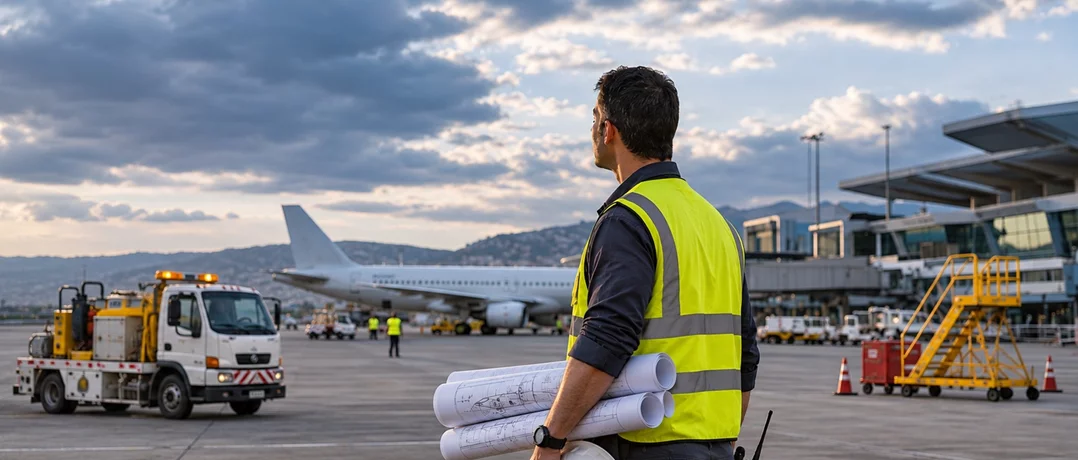
Lebanon steps up efforts to reform aviation sector into line with international safety and regulatory standards following an assessment by the International Civil Aviation Organization (ICAO).
In this context, a source at Beirut International Airport (BIA) revealed to The Beiruter that most of the shortcomings identified by the ICAO mission were already known to Lebanese authorities before the assessment was completed, and that efforts to address them had been underway.
The source further stated that the findings should be seen as part of a broader process to bring the airport into compliance with international requirements, rather than as newly discovered problems affecting its daily operations. Regional instability and the exceptional circumstances facing Lebanon had also disrupted normal procedures and delayed progress on some technical and administrative requirements.
Public Works Minister
Likewise, Public Works and Transport Minister Fayez Rasamny acknowledged that the regional war affected the pace of work, while maintaining that corrective measures were being implemented. He has also indicated that efforts to renew the airport’s certification were progressing, with the Civil Aviation Authority expected to issue conditional certification shortly after the ICAO findings became public.
Reforms
Lebanese authorities have begun working on the recommendations, with the Ministry of Public Works and Transport coordinating efforts with international partners.
In September, a two-day Air Transport Stakeholder Workshop brought together Lebanese aviation and security authorities, international representatives and technical advisers from the World Bank (WB) Group. Discussions focused on compliance with ICAO standards, preparations for the US Federal Aviation Administration’s (FAA) International Aviation Safety Assessment (IASA), and security requirements set by the Transportation Security Administration (TSA).
The proposed measures include strengthening the Civil Aviation Authority’s regulatory capacity, improving airport safety and emergency response procedures, and separating airport management from regulatory supervision.
However, some of the institutional weaknesses predate the ICAO assessment by several years. Although a 2002 law provided for the establishment of an independent Civil Aviation Authority, the body has never been fully established.
The Beirut International Airport Company, approved by the Council of Ministers last June as a state-owned entity responsible for managing and operating the airport, has also yet to assume its responsibilities.
Both issues are part of a wider effort to reorganize the sector and ensure that airport operations and regulatory oversight are handled by clearly defined institutions.
ICAO
It is worthy to note that the ICAO technical mission, conducted in July 2026 at the request of Lebanese authorities, examined airport operations and the country’s wider civil aviation oversight framework. Its findings, submitted to Lebanon in September, identified several areas requiring urgent attention.
According to a summary of the internal report seen by Reuters and published on October 16, BIA’s firefighting capabilities were among the main concerns. Existing equipment was considered suitable for single-aisle aircraft but insufficient for larger, twin-aisle planes commonly used on long-haul international routes.
The report also pointed to weaknesses in emergency preparedness, including the absence of an adequate emergency plan, and noted that the airport’s conditional certification had expired. ICAO described the situation as a “serious and time-critical matter,” stressing the need for immediate corrective action.
The problems were not limited to airport facilities. The assessment identified a shortage of qualified inspectors within the Lebanese Civil Aviation Authority (LCAA), particularly those responsible for overseeing air traffic control licensing.
It also raised concerns about the country's aircraft accident investigation framework, pointing to the need for a fully independent authority with clearly defined responsibilities. International aviation standards require accident investigations to be conducted independently, ensuring that findings and safety recommendations are based on technical evidence.
Meeting international requirements
The ICAO recommendations are not the only requirements Lebanon must address. Separate assessments by American authorities will also determine whether the country meets the conditions necessary for the resumption of direct flights.
The FAA examines the ability of a country's civil aviation regulator to oversee airlines and enforce internationally recognized safety standards. The TSA, meanwhile, focuses on airport security, including passenger and baggage screening, access controls and measures to prevent unlawful interference.
These assessments cover different aspects of aviation safety and security, making improvements to both the airport's infrastructure and the institutions supervising it necessary.
US connection
The push for reform has taken on added importance as Lebanon seeks to restore direct commercial flights between Beirut and the United States, suspended since 1985.
US President Donald Trump declared an initiative to revive the route on July 21, following his meeting with President Joseph Aoun at the White House. On September 30, he signed a presidential memorandum revoking restrictions imposed through successive US presidential decisions since 1985, removing a major political and legal obstacle to restoring direct flights.
However, the route’s return remains dependent on technical, security and regulatory approvals.
For Lebanon, reopening the route to the US will be only one measure of progress. The more immediate task is to address the deficiencies identified by ICAO and establish an aviation system capable of meeting international standards, with effective oversight, properly equipped facilities and institutions able to carry out their responsibilities.
