



As the costs of opening a restaurant remain high, pop-ups give chefs in Lebanon room to experiment, build an audience and develop their businesses without a permanent space.
Beyond four walls: Lebanon’s pop-up dining scene
Beyond four walls: Lebanon’s pop-up dining scene
By Rayanne Tawil | November 07, 2026

Reading time: 5 min
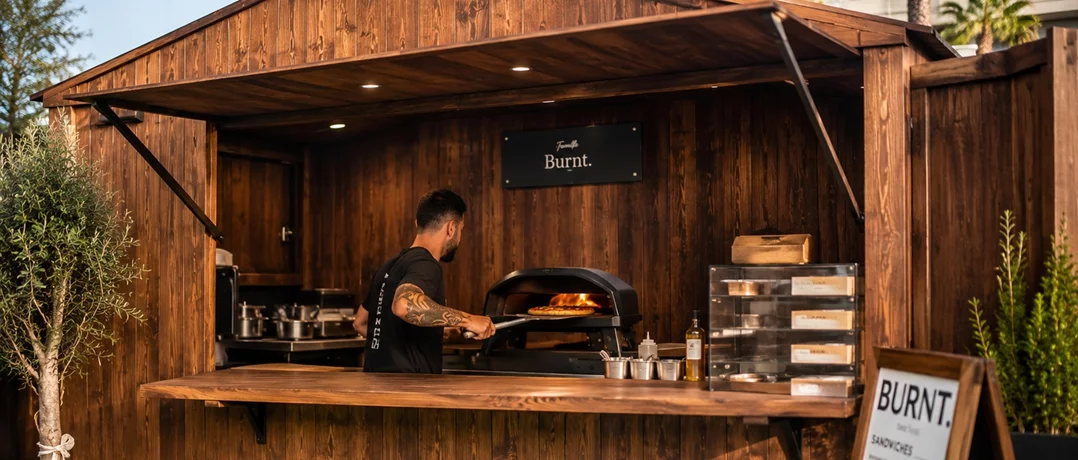
A few tables pushed together, strangers exchanging names over the first course, the chef stepping away from the stove to explain what is about to arrive. Nearby, a pan sizzles or a pizza emerges from a portable oven, its crust blistered from the heat.
The “room” might be a garden, a bar after closing hours or a corner of a cultural venue. A few hours later, the tables will be cleared and the kitchen will move on.
That temporary quality defines the pop-up. Chefs create short-lived dining experiences in spaces that change from one event to the next, taking over existing kitchens, bringing their own equipment or building menus around a particular venue.
In Lebanon, where opening a restaurant is increasingly expensive, pop-ups can test dishes before investing in a permanent spot, and offer customers something that only comes on a rotating basis.
As far as dining experiences go, these pop-up eateries are one of the most limited, intimate things around.
A restaurant for a night
After the 2019 uprising, Tamim Abdo of Tamim’s Kitchen built a makeshift setup in Ras Maska, north Lebanon, using a kiosk, leftover metal from Nour Square in Tripoli and wooden tables. A tent became his dining space and three dishes were enough to get started. “I popped up,” he recalls with a laugh.
Jean Habchy’s Table du Chef took shape from a different starting point.
Inspired by a documentary about a Peruvian village where families welcomed visitors into their homes for meals, he developed his idea during the COVID lockdown. Based in Broummana, Table du Chef brings small groups together for dinners shaped around the guests and the occasion.
Yves Nasrallah’s BURNT. grew out of sourdough experiments during the COVID lockdown. A former programmer, he revived his grandmother’s starter before buying a portable pizza oven in 2024.
His weekend hobby became “Fires,” a series of one-night events with ovens and folding tables travelling between venues.
Other chefs work through existing hospitality spaces.
Seafood chef Kabalan Mansour collaborates with existing bars and pubs that have their own kitchens, creating menus that don’t require the high costs of opening a full-fledged restaurant. Rayan Al Dente’s Italian cuisine meets pop-up and private dining in Terra e Tavola, as he experiments with seasonal fare and beyond the ordinary dishes.
More than what’s on the plate
Unlike a restaurant, where the menu and decor are fixed, a pop-up can be customized to the venue, the season, or the particular crowd it's likely to attract.
Its limited run allows for experimentation and the possibility that it will not return encourages attendance.
At BURNT., Yves uses 72-hour fermented dough and five different flours in his pizzas. He combines elements of Naples and New York pizzas with Levantine flavors such as basterma and goat labneh with black garlic, and a halawa calzone with pistachios and rose.
“You’re close to the whole process. You can see the dough being stretched, watch the pizza bake and speak to the person making it,” Yves says.
At Table du Chef, guests can share their preferences or explain that they are celebrating a birthday, giving Jean a starting point for the evening. “I was never the kind of chef who wanted to stay hidden behind the kitchen doors,” he says.
The experience can be as vital as the cuisine: guests meet the chef, discover the ingredients and share tables with strangers. For chefs, their reaction also indicates what dishes are worthy of a repeat visit
Making it work in Lebanon
Flexibility comes with uncertainty. Temporary kitchens still require equipment, ingredients, staff and careful planning. Chefs must account for transport, refrigeration, electricity, weather and bookings, while continually telling diners where the next event will take place.
Tamim takes every location as a challenge, constantly changing his menu and setup to accommodate the customers that he has. One dinner, a gathering expected to draw a specific age group, was suddenly filled with children. They huddled around the pizza oven, and the evening took on the feel of a pizzeria on a busy street. The team adjusted to the crowd rather than forcing the original plan.
Yves has encountered another side of that unpredictability.
At a Christmas market in Jounieh, customers waited up to an hour for his pizzas. During a 25-day run at Mzaar, guests signed the back of a large menu, leaving behind a record of those who had passed through.
Pop-ups do not remove the difficulties of running a food business, nor do they necessarily replace the ambition of opening a permanent restaurant. They offer another way to start, experiment and sustain a practice in a country where long-term commitments can be difficult.
As Tamim puts it, “A pop-up is the ultimate alternative for not having a local somewhere you want to be.”
-
-

-
Rayanne TawilCultural writer
-
