



EBML’s campaign in three municipalities targets illegal water connections, unregistered subscriptions and unpaid bills as Lebanon seeks to improve revenue collection and strengthen public water services.
After EDL, EBML tackles illegal connections
After EDL, EBML tackles illegal connections
By Michael Al Andary | November 06, 2026

Reading time: 5 min
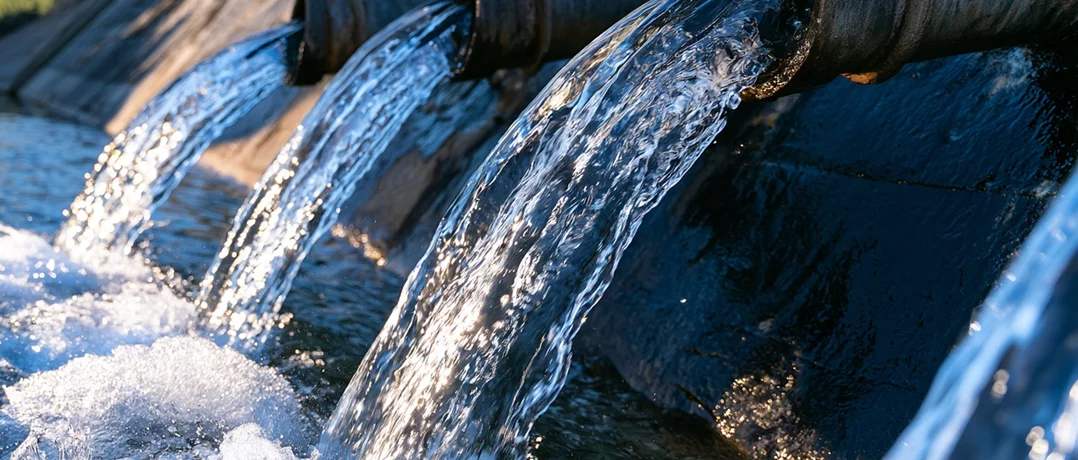
On Thursday, the Beirut and Mount Lebanon Water Establishment (EBML) has launched a campaign to regulate water subscriptions, crack down on illegal connections and recover unpaid bills, in a move aimed at addressing longstanding problems in the management of public water resources and increasing revenues for the state.
As declared in a press release, the campaign will initially target Ras el-Matn, Shehim and Beit Mery, with EBML seeking to bring unauthorized connections under control, improve the monitoring of water consumption and ensure that subscribers pay their dues.
An administrative source at EBML told The Beiruter that the initiative seeks to “correct a deviated path” that has persisted for years, pointing to longstanding practices that have undermined the management of the water sector.
The source also accused previous energy ministers, without naming them, of being “partners in the crime of giving water for free,” arguing that the failure to enforce regulations and collect payments had contributed to the sector's current difficulties.
Addressing years of mismanagement
Lebanon’s water sector has struggled with structural problems for years. Despite the country’s relatively abundant water resources, public water institutions have faced inadequate infrastructure, significant water losses, weak revenue collection and insufficient investment.
EBML’s campaign seeks to address some of these shortcomings through a series of administrative and technical measures.
According to its announcement, the operation will be conducted in two phases, running from November 16 to December 29, 2026, and from January 4 to May 31, 2027.
The measures include inspecting existing water meters and replacing faulty ones, updating subscriber records, removing unauthorized connections and illegal pumps, and installing modern meters on main distribution lines to improve the monitoring of consumption and detect losses.
Residents without registered subscriptions have been asked to apply for legal connections before November 16, while existing subscribers have been urged to settle their 2026 water bills and outstanding payments. The establishment warned that unauthorized connections would be removed and water supplies cut off.
Recovering revenues and restoring state authority
Beyond its technical objectives, the campaign addresses a broader issue facing Lebanon’s public institutions: their ability to enforce regulations and collect revenues.
Illegal connections and unauthorized pumps are not simply technical violations. They reflect the difficulties faced by public authorities in ensuring that regulations are applied equally and that access to public services is properly administered.
The establishment’s efforts to remove illegal connections and bring unregistered consumers into the official system are therefore also an attempt to reassert state authority over a public resource.
Revenue collection is another central component. Public water institutions need a steady income to maintain distribution networks, repair infrastructure and improve the quality of their services. When subscribers avoid payment or obtain water through unauthorized connections, the financial burden falls increasingly on those who comply with the rules.
By updating subscriber records, regulating meters and pursuing outstanding payments, the establishment hopes to introduce greater transparency into the system and ensure that consumption is properly recorded and billed.
Water and electricity: not for free
The move also follows a similar initiative by Electricité du Liban (EDL), which began disconnecting electricity from public administrations, institutions and municipalities on November 2 over unpaid bills. The state electricity provider said it would restore supply only to entities that made partial payments and provided written commitments to settle their outstanding debts in installments. Public-sector arrears owed to EDL are estimated at around $250 million. Both initiatives point to a broader effort by state-owned utilities to recover public funds, enforce payment obligations and address a culture of non-payment that has long undermined the financial sustainability of public services.
A wider reform challenge
EBML’s initiative comes amid broader efforts to improve Lebanon’s water infrastructure and strengthen the financial and administrative capacity of public water institutions.
In January 2025, the World Bank (WB) approved $257.8 million in financing for the Second Greater Beirut Water Supply Project. The project includes measures to improve water quality, reduce water losses, digitalize operations and strengthen billing and collection systems at the Beirut and Mount Lebanon Water Establishment.
The campaign’s objectives are consistent with some of these broader priorities, particularly the need to reduce losses and improve revenue collection.
However, the effectiveness of the initiative will ultimately depend on its implementation. Announcing inspections and threatening to remove illegal connections are only the first steps. Ensuring that regulations are consistently enforced, outstanding bills are collected and the network remains properly monitored will require sustained institutional commitment.
The initial campaign in three municipalities could provide an indication of whether the establishment can translate its stated objectives into concrete results. Extending such efforts and maintaining them over time will be essential if Lebanon’s water institutions are to become more financially sustainable and accountable to the public.
