



Four generations of Lebanese men reveal the emotional toll of inherited expectations of masculinity, family responsibility and silence, and the growing courage to seek help.
Lebanese men and the pressure to stay strong
Lebanese men and the pressure to stay strong
By Jenna Geagea | November 11, 2026

Reading time: 4 min
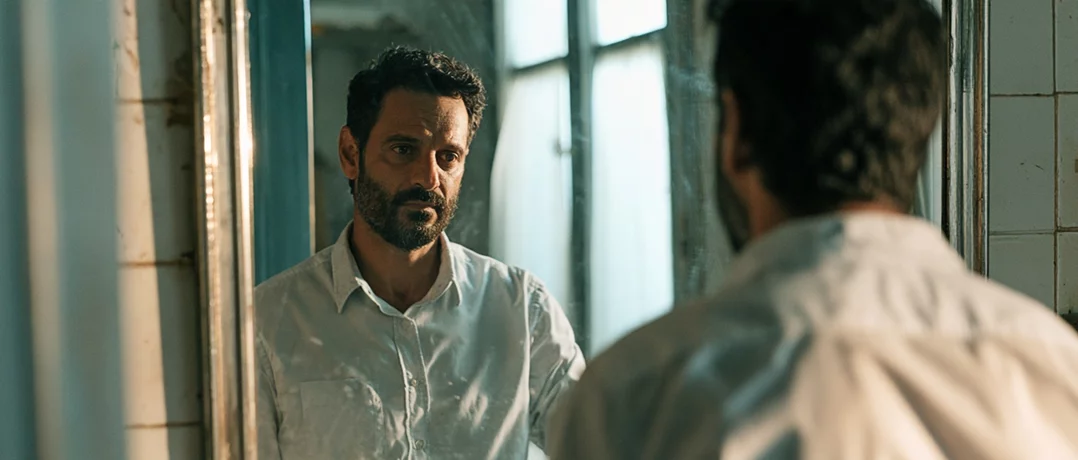
In Lebanon, we teach boys to carry things early. We hand them the family’s name, the family’s honor, and, eventually, the family’s weight. What we rarely hand them is permission to put any of it down.
Men don’t cry. Everything’s fine. These sentences are passed from fathers to sons like heirlooms, and like heirlooms, they are kept long after anyone remembers why.
Taught to endure
Georges Rahme, 67, is a retired army sergeant. He stood through the war years without flinching, and he is proud of that.
“We did not have a word for it,” he told The Beiruter. “If a man was struggling, you did not ask him. You gave him a cigarette and you changed the subject. That was our kindness.”
He had worn a uniform for thirty years, and he knew how to follow orders, how to hold a line, how to stay standing. Nothing in those years had trained him to deal with the pain he endured.
He spent the years after struggling with the traumas of war in silence. “My wife would ask, ‘Georges, what is wrong?’ And I would answer, ‘Nothing, go back to sleep.’ For months, nothing was wrong.”
“I think about my father. He never once told me he was afraid. I understand now that he was afraid every day. And I gave my own son the same silence.”
Behind the role of the provider
Hadi Tannoury, 45, owned a furniture workshop in Gemmayze. On August 4, 2020, the port exploded, and the workshop went with it.
He survived. “Everyone called me strong. The neighbor, my brother, my wife’s family. How do you tell people who admire you that you are drowning?”
The workshop had belonged to his father first. All of it was gone in a single second. “People kept telling me, ‘Thank God you were not inside.’ And I would nod. I was grateful, I really was. But nobody asked me what it is like to be alive and to have lost the only place where you knew who you were.”
He has two daughters, and he decided they would never see him break. “A man in this country is a wall. If the wall cracks, the whole house is afraid.” He paused. “It took me two years to understand that my daughters could feel the crack anyway. Children always feel it. They just don’t know what to call it.”
Success at a distance
Rami Ghantous, 31, has an engineering job in the Gulf and a salary that supports eleven relatives back home. From the outside, he is the success story every family hopes to have.
“My mother brags about me at every gathering,” he laughed, and then the laugh falls away. “Nobody asks whether I eat dinner alone. Nobody asks if I have spoken to another human being on a Tuesday.”
He left because staying meant having no future. Leaving meant having no one. “I send money, and in return I get love in the form of gratitude. It is not the same thing. But I cannot complain. How can I complain? Their lives are harder than mine.”
He keeps his phone face-up on the table at night, in case someone back home needs him. “I am afraid that if I tell them I am struggling, it will sound ungrateful. A man who sacrifices is not allowed to be sad about it. That is the unspoken rule.”
Learning to speak without shame
Tarek Karame, 22, is studying in Beirut. He comes from a family in Tripoli, one that loves him fiercely and has never once used the word anxiety.
For a year he lived with a tightness in his chest that no one could explain. He left lectures early. He stopped answering calls. Eventually, he found a campus counsellor.
“I felt like I was committing a crime. Walking into that office, I kept checking the corridor, as if somebody from my village might see me.”
His first session, he could not speak at all. The counsellor waited, and the silence stretched, and then something gave way.
“I cried for twenty minutes. I was so embarrassed. And she just handed me a tissue and nodded, like it was the most natural thing in the world. “
Twenty-two years of my life, and that was the first time anyone treated my tears as normal.” He has not told his father. He is working up to it. “I want to tell him that I am okay because I asked for help. Not in spite of it.
There is a different kind of courage waiting for the next generation of boys. It is the courage to answer how are you? with the truth. To tell a friend, a brother, a father, I am struggling. To sit in a doctor’s office and let the tears come. This silence was inherited. It does not have to be passed on.
-
-

-
Jenna GeageaReporter/Writer
-
