



As world leaders debate fossil fuels, energy security and climate action at COP31 in Turkey, Lebanon is drawing attention to another part of the climate crisis: the environmental damage left by war and the challenge of rebuilding a country already weakened by economic collapse.
Lebanon brings the cost of war into the COP31 climate debate
Lebanon brings the cost of war into the COP31 climate debate
By Natalie Durham | November 12, 2026

Reading time: 4 min
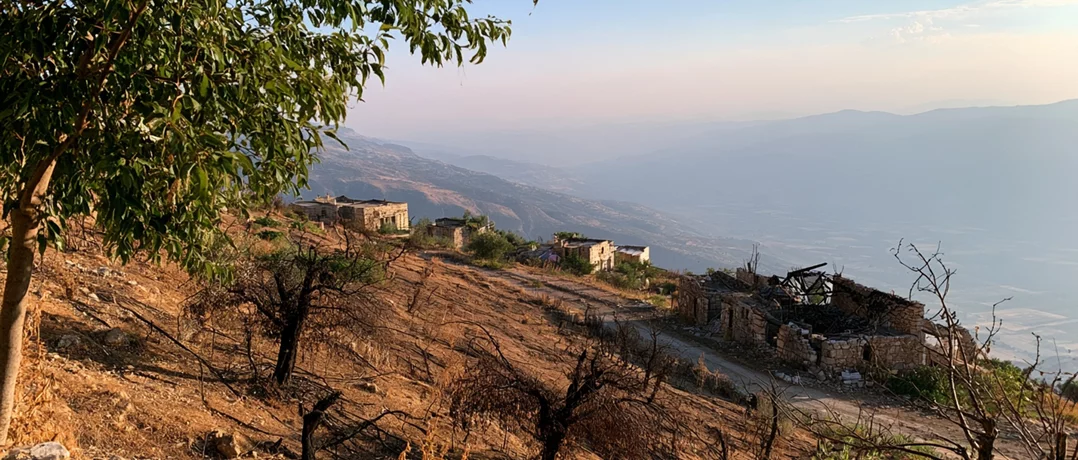
As world leaders gathered in Antalya for COP31, much of the international debate centered on one familiar question: how quickly can countries move away from fossil fuels?
For Lebanon, however, the climate challenge carries another dimension.
Speaking at the UN climate conference in Turkey, Prime Minister Nawaf Salam linked Lebanon's environmental challenges directly to years of war, economic collapse and the difficult process of reconstruction saying that "for Lebanon, climate challenges cannot be separated from the consequences of wars and economic collapse, and from the difficult national task of recovery and reconstruction." At the same time, COP31 was exposing clear differences between countries over how far and how fast the world should move away from fossil fuels.
COP31 puts fossil fuels back at the center
COP31 opened in Turkey following a year of severe heatwaves, wildfires and deadly floods that renewed pressure on governments to strengthen their climate commitments.
UN Secretary-General Antonio Guterres issued one of the summit's strongest warnings, telling world leaders that current action was failing to keep pace with the climate crisis.
"The brutal truth is that the climate crisis is outrunning us," he said.
Guterres focused heavily on the continued use and expansion of fossil fuels, saying governments could not claim to support climate action while continuing to increase fossil fuel production.
"Fossil fuels must go the way of the dinosaurs," he said, accusing the industry of working to delay scientific, political and accountability efforts.
The issue has remained difficult since countries agreed in 2023 to transition away from fossil fuels. Progress since then has been limited, while energy security and economic concerns continue to complicate negotiations.
Different positions were visible during the summit.
Marshall Islands President Hilda Heine warned that every new oil well and every additional piece of coal extracted posed a threat to countries already vulnerable to rising sea levels.
Turkish President Recep Tayyip Erdogan, by contrast, called for a "fair" energy transition that takes into account countries' energy security and different development needs.
Saudi Arabia's Energy Minister Prince Abdulaziz bin Salman also warned that pursuing carbon neutrality without protecting energy security could undermine broader development efforts.
With several major world leaders skipping the summit, there are also growing concerns that climate change is slipping down the global agenda as wars, trade disputes and other crises take priority.
Lebanon links climate damage directly to war
While much of COP31 has focused on energy transition, Salam brought Lebanon's experience of war into the discussion.
He said years of financial crisis had already weakened Lebanon's institutions and public facilities before successive wars caused further destruction.
According to Salam, the damage extended beyond homes and infrastructure to agricultural land, forests and ecosystems. He said environmental losses resulting from Israeli attacks exceeded $512 million during 2023 and 2024 alone, in addition to further losses suffered by Lebanon during 2026.
But Salam stressed that the real environmental impact cannot be measured only through financial figures. The effects of war, he said, will remain visible in ecosystems, livelihoods and local communities for years to come. This means that Lebanon's recovery, in his view, cannot simply focus on reconstructing destroyed buildings and roads.
Agricultural land also needs to be restored, damaged ecosystems rehabilitated and livelihoods revived.
Reconstruction beyond homes and roads
Salam said Lebanon considers environmental restoration and stronger climate resilience essential components of reconstruction. He linked those efforts to the wider goals of achieving stability, restoring sovereignty and respecting international law.
This also raises the question of financing.
Lebanon, already struggling with the consequences of financial collapse and repeated wars, faces significant limits in funding a recovery that must now address both physical reconstruction and environmental damage. Salam said national efforts alone would not be enough to overcome the structural and financial constraints facing a country emerging from prolonged crises.
He called for greater public financing, a stronger role for grants and simpler procedures allowing countries to access existing climate financing mechanisms. He also stressed the need for these mechanisms to take into account the particular conditions of countries affected by crises.
The Lebanese message at COP31 therefore differs in emphasis from much of the wider discussion taking place in Antalya. While major powers and energy-producing countries argue over fossil fuels, carbon neutrality and energy security, Lebanon is asking the international community to consider how climate policy applies to countries trying to rebuild after war.
For Lebanon, the climate challenge is not limited to reducing future environmental risks.
It is also about repairing environmental damage that has already occurred.
-
-

-
Natalie DurhamResearcher/Writer
Junior research writer focusing on politics, public policy and international affairs.
-
