



Entering Taanayel’s autumn landscapes and going through the roadside stalls of Aana and Ammiq, a seasonal outing brings visitors closer to the farmers, harvests and traditional recipes that make pumpkin season part of the Bekaa.
The Bekaa Valley’s pumpkin trail is a road trip into autumn
The Bekaa Valley’s pumpkin trail is a road trip into autumn
By Rayanne Tawil | November 14, 2026

Reading time: 6 min
Sneakers, hats, water bottles and earthy-colored outfits: the passengers gathering at the different pick-up points seemed to have dressed for the occasion.
Phones were ready, cameras charged and conversations revolved around the day ahead. Some came for the pumpkins, others for the scenery and plenty were already imagining the photographs they would take along the way.
The bus filled up before heading towards the West Bekaa, with Mohamad Youssef, the group's guide and a member of Stroll Adventure, introducing the day's stops.
“We are always looking for new ideas and experiences to offer people. We wanted to introduce something different, and pumpkin trails were one of the seasonal activities we felt deserved more attention in Lebanon,” Youssef told The Beiruter.
Hasan Harb discovered the outing through Instagram and decided to join after seeing photographs of the pumpkins. “First of all, I haven't seen it before in Lebanon. I liked the colors, and they are just amazing,” he said. “I wish to get to know more about the place. Secondly, they talked about the goats, the horses, everything to do with nature in general.”
Rita Abou Issa also booked immediately after seeing the photographs. She had not visited the area in around 10 years. “I liked the pumpkin, the pictures we took, the vibes, and that's it,” she said.
Halloween was not her main motivation. She wanted to explore and enjoy the atmosphere.
A stop among the trees
The first destination was Dar Taanayel, where stone buildings and the monastery set the scene, while red tents and small wooden booths lined the entrance. Vendors displayed crocheted pieces, homemade mouneh, plants and clay cups. The smell of freshly prepared saj bread filled the air, with visitors stopping for zaatar, lemonade and a look at the local products.
Further inside, a path shaded by willow trees followed the lake, its surface catching the autumn light. Families walked alongside couples and groups of friends, while some visitors rented bicycles or stopped to feed the animals. Sheep, goats, donkeys and ducks added to the rural atmosphere. Children moved between the enclosures as others took their time along the water.
The surrounding mountains, open fields and changing foliage offered a glimpse of the Bekaa at its most colorful.
Youssef explained why he chose the destination for the outing: “Taanayel Nature Reserve is another beautiful destination during this season, offering visitors a peaceful natural setting.” He also points to the agricultural calendar as part of the attraction. “The West Bekaa, for example, is known for its pumpkin production, while villages in the region offer opportunities to experience traditional olive harvesting.”
Arab El Baaba, who travelled from a, had wanted to visit Taanayel for some time. “I took it as an opportunity to visit Taanayel and to visit the pumpkin patch,” she said. “Definitely, it is a whole collection.”
Along the pumpkin road
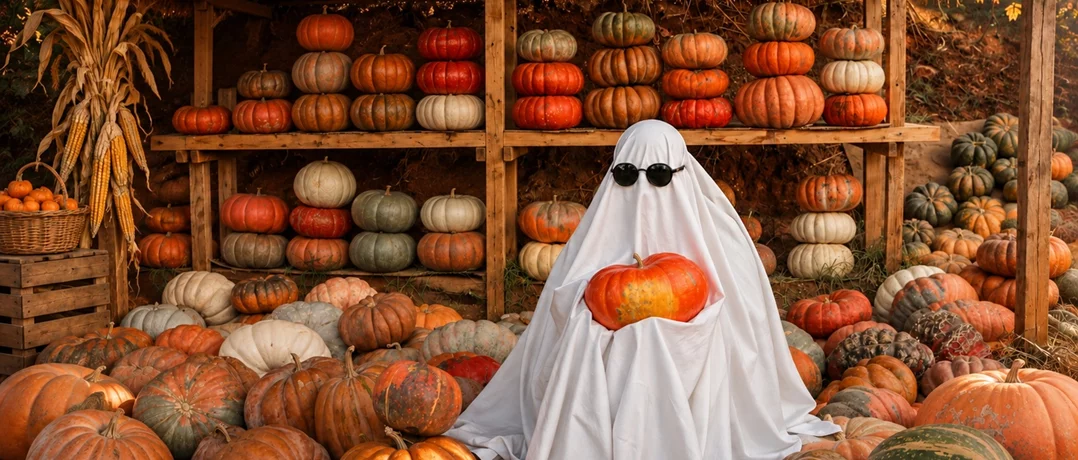
The drive to Aana and Ammiq brought the group to the roadside stalls, where farmers displayed their harvest in rows of orange, cream, white, green and pale-pink pumpkins. Some were round, others elongated and several had been painted with Halloween faces.
At one of the stands, the Abu Aane family spoke about the family's agricultural business. “We have been growing pumpkins for around 40 to 48 years,” they explained. Cultivating the crop in the fertile land of the area. “Different varieties serve different purposes, from kebbeh to jams, soups, stews and sweets,” they added. “The price usually ranges from LL 60,000 to LL 150,000 per kilogram, depending on the variety.”
The Halloween period brings additional visitors to the stall, although the Abu Aane family believes many now come specifically to buy produce. “Everyone takes [them] to eat. Some of them make food for babies,” they explained. Asked whether the seasonal interest helps the business, the answer was: “It makes a movement.”
Further along in Aana, Elias Chhawbar's family has maintained its roadside business since the early 1990s. The family also cultivates tomatoes, peppers and zucchini, while pumpkins have become an important attraction during autumn.
“We focused on attracting people. How do you attract people? You need something that attracts people,” Chhawbar said, explaining why the family concentrated on expanding its pumpkin varieties. Visitors now arrive to photograph the displays, celebrate birthdays and choose pumpkins for Halloween and Eid al-Barbara.
“Visitors are welcomed to photograph the displays, even if they do not purchase anything,” he explained. “People have been discovering the stall through Instagram; taking photographs and videos has helped spread the word for our business, but the economic climate continues to affect sales. Last year's season was better.”
Straight from the stall to the kitchen
For some visitors, the pumpkins were part of the costume.
Jessie and George Abi Nader came separately with their children from Beit ed-Dine in the Chouf after discovering the outing on social media. Their children wore Halloween costumes and spent the journey talking about the pumpkins. “We're excited. We're going to get a pumpkin to do pumpkin soup and all the recipes,” they explained.
And some were already destined for the kitchen.
Harb planned to make soup. “We [His family] usually make pumpkin soup,” he said. Arab El Baaba also enjoys the dish and was interested in experimenting with pumpkin jam.
In the Bekaa, lakteen also goes into kibbet lakteen, a traditional preparation that Lina Haddad learned after getting married around a decade ago. A cook who has documented herself preparing the dish with her family, Haddad gathered the recipe from several women around her.
“I learned it from my mother, from my neighbors, from here and there. I kept asking,” she said. “I was 42 years old. I didn't know how to make kibbeh. Then I learned it.”
The preparation begins with boiling the pumpkin, straining it and mixing it with bulgur and flour. Haddad experimented with chickpea flour instead of regular white flour. “I found that it turned out really good, and it remained soft. It didn't get hard,” she explained.
Her stuffed kibbeh combines onions, walnuts, chickpeas and sumac, sometimes with lettuce, spinach or wild vegetables gathered from the fields. Another version uses goat's labneh and awarma, which she prepares with kishek during winter.
Haddad also grows lakteen herself and makes jam from part of her harvest. She worries that younger generations may not develop the same interest in traditional cooking. Her daughter, who lives in France, has learned to prepare the dough, although she still makes the kibbeh in a tray.
Bringing people back to the Bekaa
Back on the road, the visitors continued stopping at the displays, choosing pumpkins and taking photographs.
Jinan Saydah, who joined with her son, Rida, and her friend Mariam, enjoyed the outing as a family activity. Abou Issa was already considering other destinations to explore. “Sightseeing inside Lebanon is a must. Especially us Lebanese people,” she said.
Youssef hopes the outings will encourage people. “We encourage participants to buy local products because they can offer good value and allow consumers to support farmers directly,” he said.
For him, the experience should extend beyond the photographs.
“We want every person who joins us to develop a genuine appreciation for nature,” he explained. “Ultimately, we hope our outings leave people with more than photographs: we want them to take home meaningful memories and a deeper appreciation for the country they live in.”
-
-
-
Rayanne TawilCultural writer
-
