



Exploring the Mediterranean diet’s rich cultural heritage, proven health benefits and enduring relevance in Lebanese kitchens amid changing eating habits.
The Mediterranean diet through history and science
The Mediterranean diet through history and science
By Jenna Geagea | November 16, 2026

Reading time: 5 min
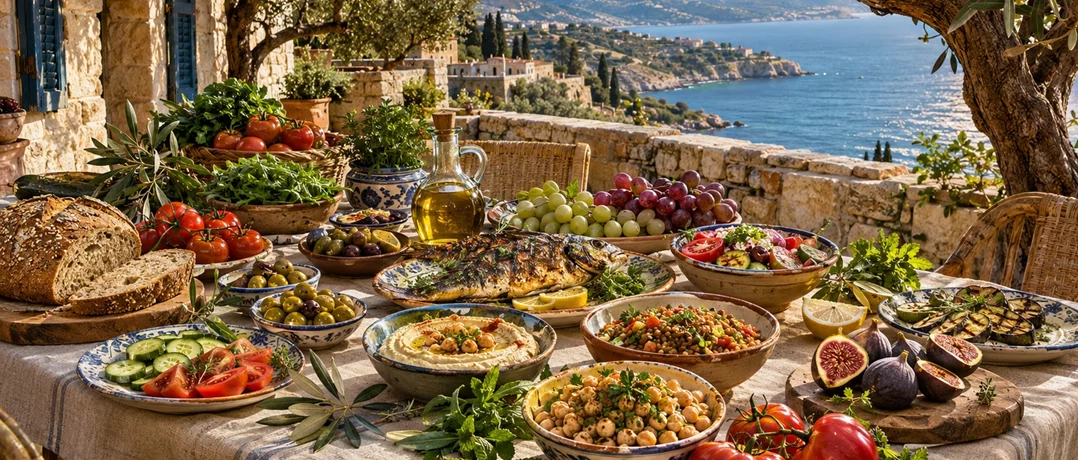
Mediterranean Diet Day invites the region to look at what sits on its tables. The date marks the 2010 inscription of the Mediterranean diet on UNESCO’s Representative List of the Intangible Cultural Heritage of Humanity, a recognition expanded in 2013. The designation treats the diet as a set of skills, rituals and traditions handed from one generation to the next.
Lebanese dietitian Melissa Kozah told The Beiruter that “the Mediterranean diet is much more than a nutritional trend. It is a centuries-old way of eating that developed naturally through the agricultural traditions, geographical characteristics, and cultural exchanges of countries surrounding the Mediterranean Sea.”
Kozah traced the pattern back to the Greeks, Romans, Phoenicians and Egyptians, whose diets relied on what the land and sea offered, olive oil, grains, legumes, vegetables, fruit and fish. Trade routes carried new ingredients across the water, and each region developed its own culinary identity.
The result is not one national cuisine but a shared philosophy. Lebanon has hummus, tabbouleh, lentils and olive oil. Greece favors vegetable- and legume-rich dishes. Italy applies the same principles through pasta, vegetables and seasonal produce. “Although the recipes differ, the foundation remains remarkably similar, fresh ingredients, minimally processed foods, plant-based diversity, and balanced meals,” Kozah noted.
Science took notice in the twentieth century. American physiologist Ancel Keys’s Seven Countries Study, launched in the late 1950s, linked traditional Mediterranean eating patterns with lower rates of heart disease. “One of the world’s most extensively studied healthy dietary patterns was not originally created as a diet plan,” she observed. “It developed naturally as a way of life.”
That way of life extends well beyond food. Kozah described Mediterranean meals as occasions for hospitality and connection. “Meals are opportunities to gather around a table, share conversations, celebrate traditions, and strengthen relationships.”
She pointed to Sunday family lunches and the generous spread of mezze. She also values the diet’s psychology. “The Mediterranean lifestyle encourages enjoyment rather than restriction, balance rather than extremes, and consistency rather than perfection.” She also emphasized the importance of enjoying food without unnecessary restrictions. “Healthy eating should never mean losing the pleasure of eating.”
What the research shows
The pattern centers on vegetables, fruit, whole grains, legumes, nuts, seeds and extra virgin olive oil, with moderate amounts of fish, dairy and other animal proteins. It delivers monounsaturated fats, fiber, antioxidants and anti-inflammatory compounds.
The best-known evidence comes from the PREDIMED trial in Spain, which followed thousands of adults at high cardiovascular risk. Participants assigned to a Mediterranean diet experienced roughly 30 percent fewer major cardiovascular events than a control group. The study was republished with corrections in 2018, with its main findings remaining unchanged. Observational research has also linked closer adherence to the diet with better blood sugar control, a lower risk of type 2 diabetes and lower overall mortality.
Kozah highlighted how these benefits work in practice. Olive oil provides polyphenols that support heart health, fruits and vegetables help protect cells from oxidative damage, and whole grains and legumes aid digestion and satiety. Dietary diversity supports a healthier gut microbiome.
She also resisted any miracle-cure narrative. “The Mediterranean diet is not a magical solution, nor does one specific ingredient guarantee better health,” she cautioned. Its benefits come from the combination of nutritious foods, consistent habits, physical activity and a balanced lifestyle. In her view, the healthiest diet “is not necessarily the most restrictive one, but the one that nourishes your body, supports your long-term health, and can realistically be maintained throughout your life.”
Drifting from the kitchen
Lebanese cuisine is one of the clearest expressions of this pattern. Tabbouleh delivers fiber, antioxidants and healthy fats. Hummus and mujaddara supply plant protein, while loubieh bi zeit and fattoush reflect the centrality of vegetables, legumes and olive oil. “What is interesting is that we often look internationally for healthy eating trends while overlooking the nutritional value of the food that has always existed in our own kitchens.”
Yet daily habits are shifting. Busy schedules, food delivery, cheap fast food and ultra-processed products are crowding out home cooking, and Western-style patterns heavy in refined carbohydrates, sugary drinks and processed meats are gaining ground. Yet Kozah noted that traditional dishes are not automatically healthy regardless of preparation or portions. The concern is “the gradual replacement of diverse, nutrient-rich traditional meals with less balanced dietary patterns.”
“We do not need to abandon our traditional cuisine to eat healthier. In many cases, we simply need to reconnect with it,” she noted.
With food prices rising, affordability matters. Kozah rejected the common belief that healthy eating requires money or trendy ingredients. “The Mediterranean diet was historically built around accessible, seasonal, and locally available foods,” she explained, which is why it remains relevant for families under financial pressure.
Lentils, chickpeas and beans offer affordable protein. Seasonal produce, local buying, home cooking and less food waste keep costs down. Dishes prepared in batches such as lentil soup, mujaddara, vegetable stews and chickpea salads suit demanding schedules. She also distinguished between processed and ultra-processed foods. Canned chickpeas, frozen vegetables, plain yogurt and canned fish are, in her words, 'practical, nutritious options
Above all, Kozah reiterated that “preserving the Mediterranean diet begins in our homes, through the everyday food choices we make and the traditions we continue to share.”
-
-

-
Jenna GeageaReporter/Writer
-
