



Lebanon and Syria enter a new phase of relations as Interior Minister Ahmad Hajjar's visit to Damascus focuses on border security, smuggling and stronger cooperation between the two countries.
A new phase in Lebanese-Syrian relations

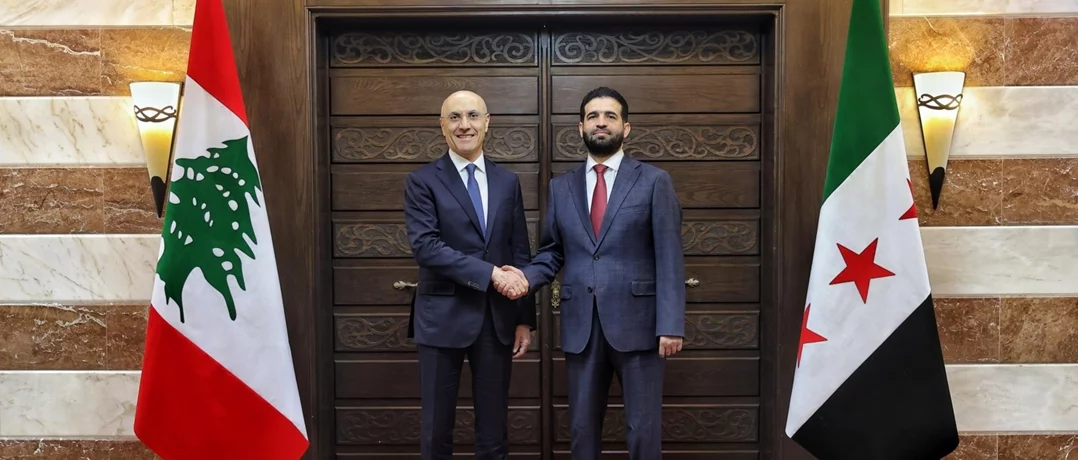
Lebanese Interior Minister Ahmad Hajjar’s visit to Damascus on November 15 came nearly 18 years after the last documented visit by a Lebanese interior minister in 2008, during Bashar al-Assad’s presidency. Meeting with his Syrian counterpart, Anas Khattab, under Syria’s new leadership, Hajjar discussed ways to strengthen cooperation between the two countries. Beyond the security discussions, the visit marked an important step toward reshaping Lebanese-Syrian relations, with both sides seeking to deal with one another as two sovereign states, on equal footing.
Beyond the official statements, both sides expressed a clear willingness to work together, particularly on controlling illegal crossings, combating smuggling and improving the exchange of security information. The meeting took place in a friendly and welcoming atmosphere, reflecting a positive approach from both sides toward strengthening relations.
Border crossings and the fight against smuggling
One of the main subjects discussed during the meeting was controlling movement across the Lebanese-Syrian border, particularly through unauthorized crossings.
Sources told The Beiruter that both ministers agreed on the need to strengthen measures against illegal border crossings. There was a clear willingness from both the Lebanese and Syrian sides to cooperate on this issue.
The discussions focused particularly on the smuggling of people and prohibited goods, as well as other forms of illegal cross-border activity. Both sides emphasized the importance of preventing unauthorized movement and improving coordination between the authorities responsible for monitoring the border.
At the same time, the ministers addressed the movement of Lebanese and Syrian nationals through official border crossings.
The two countries also discussed the stricter border procedures currently in place and possible measures to facilitate legal crossings. These included easing certain restrictions and improving cooperation between the relevant authorities.
The reopening of official border crossings that remain closed was also raised. In particular, the two sides discussed the Arida border crossing, where rehabilitation work is underway ahead of its expected reopening.
Drug trafficking and direct security coordination
Another major subject was cooperation in combating drug trafficking, an issue that has long affected security along the Lebanese-Syrian border.
Hajjar and Khattab discussed strengthening the exchange of information between their security agencies to identify trafficking operations and prevent illegal shipments from crossing the border.
This cooperation is not new and has already contributed to several seizures. In some cases, Lebanese authorities have shared information with their Syrian counterparts, allowing them to intercept illegal shipments. In other cases, Syrian authorities have provided information to the Lebanese side, leading to similar results.
This existing cooperation was an important part of the discussions in Damascus. Rather than beginning coordination from scratch, the two ministers examined ways to strengthen communication mechanisms already operating between their respective security agencies. Both interior ministries are already exchanging information and cooperating on several matters.
A welcoming visit and a new approach to bilateral relations
Beyond the security discussions, the visit was marked by a particularly warm and friendly atmosphere between the two ministers.
The meeting took place as Lebanon and Syria seek to strengthen official communication following the fall of Bashar al-Assad's government in December 2024.
It also followed a November 2 visit to Damascus by a Lebanese delegation headed by Deputy Prime Minister Tarek Mitri, during which officials discussed Syrian displacement, refugee returns and border management.
Hajjar and Khattab first participated in an expanded meeting attended by delegations from both interior ministries. The session lasted approximately an hour and a half and was followed by a private meeting between the two ministers, lasting around 30 minutes.
The visit also extended beyond the ministry's headquarters. The ministers toured Old Damascus, visited Bab Touma and the Umayyad Mosque, and traveled to Mount Qasioun, where they shared coffee overlooking the Syrian capital.
From 2008 to 2026: A new era in Lebanese-Syrian relations
Lebanese-Syrian relations have changed significantly since the last documented visit by a Lebanese interior minister to Damascus in November 2008. At the time, former Lebanese Interior Minister Ziad Baroud met with his Syrian counterpart under Bashar al-Assad's presidency, three years after the assassination of former Prime Minister Rafik Hariri. Nearly 18 years later, Hajjar's visit comes under a new Syrian leadership and in a different political context. This time, the emphasis is on building relations from state to state, with Lebanon and Syria dealing with one another as two sovereign countries on equal footing.
For Lebanon and Syria, the meeting highlighted a willingness to move forward on practical security matters while maintaining a positive diplomatic relationship. With cooperation already underway between their security agencies, the next question is whether this renewed political engagement will lead to stronger border controls, fewer smuggling operations and more effective coordination between the two countries.
-
-

-
Natalie DurhamResearcher/Writer
Junior research writer focusing on politics, public policy and international affairs.
-
