



The untold story of Lebanon's independence press, from newspapers challenging French censorship to underground publications that kept the independence movement alive in 1943.
The underground press that fought for Lebanon's independence
The underground press that fought for Lebanon's independence
By Natalie Durham | November 21, 2026

Reading time : 6 min
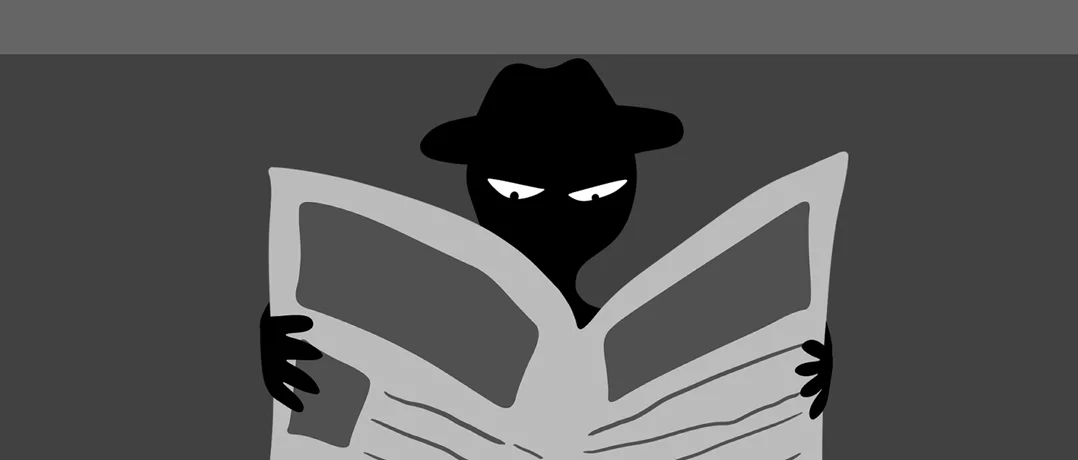
In November 1943, while Lebanon's political leaders were imprisoned in Rashaya and the provisional government operated from Bchamoun, another struggle was taking place far from the streets and demonstrations. Behind closed doors, journalists were writing articles, printers were secretly producing newspapers, and activists were finding ways to deliver them to the public despite French censorship.
But this struggle began long before the events of November 1943. Throughout the French Mandate, Lebanese newspapers had challenged political restrictions, demanded constitutional rights and called for national sovereignty. Some openly criticized French policies, others faced repeated suspensions, while a number of publications operated underground. At the height of the independence crisis, activists even published newspapers identified only by question marks, turning two simple symbols into part of Lebanon's fight for independence.
When newspapers went underground
In November 1943, tensions between the Lebanese government and French authorities reached a turning point. On November 8, Parliament approved constitutional amendments removing provisions associated with the French Mandate. Three days later, President Bechara El Khoury, Prime Minister Riad Al Solh and several ministers were arrested and transferred to Rashaya Fortress. Demonstrations spread across the country as French authorities restricted newspaper publication and sought to prevent information about the crisis from reaching the public.
Several newspapers stopped publishing during this period. According to historical research by Joseph Elias, reproduced by the Lebanese Association for History, An-Nahar suspended publication for 16 days, Le Jour for 15 days, L'Orient for 13 days and Lisan al-Hal for 12 days. Meanwhile, Al-Bayraq (البيرق), Al-Bashir (البشير) and the French-owned La Syrie continued publishing. With several newspapers supporting independence no longer appearing on newsstands, activists began looking for other ways to report on the political crisis.
It was during these events that an underground newspaper known as The Question Mark (علامة الاستفهام) appeared. Among those involved were independence activist Naim Moghabghab, journalist Zouheir Assiran and several other supporters of the movement. Instead of a conventional title, the newspaper carried a single question mark (؟) on its front page. Its purpose was to keep the Lebanese public informed about the political crisis and the independence movement at a time when French censorship had severely restricted the press.
As the publication gained readers, French authorities reportedly produced a counterfeit edition bearing the same question mark, hoping to confuse the public and circulate messages opposing the independence movement.
The activists responded by introducing two question marks (؟؟) to distinguish their newspaper from the French imitation. They also added the slogan «ليسقط إميل إدّه» (“Down with Émile Eddé”), referring to the politician appointed by French authorities to lead an alternative government following the arrests of Lebanon's leaders. The newspaper's symbols had become a way for readers to distinguish between competing accounts of the independence crisis.
Keeping the newspaper in circulation was far from easy. According to journalist Zouheir Assiran's testimony, French authorities began pursuing printing presses and threatened their owners with execution if they continued producing it. To escape French surveillance in Beirut, the activists moved production to the Al-Irfan printing press in Sidon, where they could continue printing copies in secret.
Assiran also recalled the situation surrounding Al-Bashir, a Jesuit-affiliated newspaper that he associated with the French military authorities. According to him, Al-Bashir was allowed to continue publishing while newspapers supporting independence faced restrictions. Assiran and Moghabghab eventually attacked its premises with an explosive projectile, forcing it to stop publication.
The press movement that began years before 1943
Although the underground newspaper emerged during the November crisis, Lebanese journalists had been challenging French rule for years. Throughout the 1930s, newspapers repeatedly confronted political restrictions, with some facing suspension and others becoming platforms for those demanding constitutional rights and national sovereignty.
In 1933, Gebran Tueni founded An-Nahar, calling for the restoration of constitutional government and challenging French political restrictions. That same year, Michel Chiha established Le Jour, while L'Orient, founded in 1924 by Georges Naccache and Gabriel Khabbaz, also faced censorship and suspensions over its positions.
Other newspapers faced similar pressure. Al-Maarad (المعرض), founded by Michel Zaccour, was suspended 17 times. Al-Sharq (الشرق), established by Awni Kaaki, faced 53 suspensions, while its founder was imprisoned three times and exiled twice, according to the Lebanese Army's historical account.
The wider nationalist press included Sawt al-Ahrar, Al-Nidaa, Beirut, Lubnan, Al-Liwaa, Al-Bilad, Al-Dabbour, Al-Diyar and Asia. Political parties also established their own newspapers, including the Communist Party's Sawt al-Shaab (صوت الشعب) in 1937, the Kataeb Party's Al-Amal (العمل) in 1939 and the National Unity Party's Al-Tala'i (الطلائع) in 1940. Although these publications represented different political views, they contributed to the growing debate over Lebanese sovereignty and French rule.
The newspapers that helped keep independence alive
The role of these publications went further than reporting daily events. Throughout the November crisis, newspapers kept readers informed about the detained political leaders, the provisional government in Bchamoun and the demonstrations taking place across Lebanon. When established newspapers could no longer publish freely, clandestine publications gave political groups another way to communicate with the public.
Their work did not end immediately with the release of the Lebanese leaders on November 22. The question-mark newspaper reportedly published its fourteenth and final edition on November 28, 1943. Assiran later recalled that, following the independence uprising, it continued under a new name, Al-Iqdam (الإقدام). Meanwhile, established newspapers resumed publication, reporting on the restoration of constitutional government and the return of Lebanon's political leaders.
The surviving archives tell the story of a press movement that extended well beyond a single newspaper. Arabic and French-language publications, communist newspapers, constitutional nationalists and underground activists all took part in the political debates surrounding Lebanon's independence. They came from different political backgrounds and did not necessarily share the same vision for the country's future.
Yet despite their differences, these newspapers continued raising questions about Lebanon's sovereignty at a time when censorship, suspensions and political restrictions threatened their ability to publish.
Today, Independence Day is remembered through the leaders who were released from Rashaya, the crowds who filled the streets and the Lebanese flag raised in celebration. But behind those familiar images lies another history, written by journalists whose newspapers were repeatedly shut down, printers who worked secretly at night and citizens who carried copies from one reader to another.
The French authorities could close a printing press, suspend a newspaper or confiscate its copies. But as the events of November 1943 showed, silencing a newspaper was not always enough to silence the people behind it.
And in the story of Lebanon's independence, even a question mark had something to say.
-
-

-
Natalie DurhamResearcher/Writer
Junior research writer focusing on politics, public policy and international affairs.
-
