



Improved security cooperation, the fall of the Assad regime and the weakening of Hezbollah have changed the situation along the Lebanese-Syrian border. Yet deeply rooted smuggling networks continue to pose a challenge to the Lebanese state.
Lebanon’s border: What has changed?

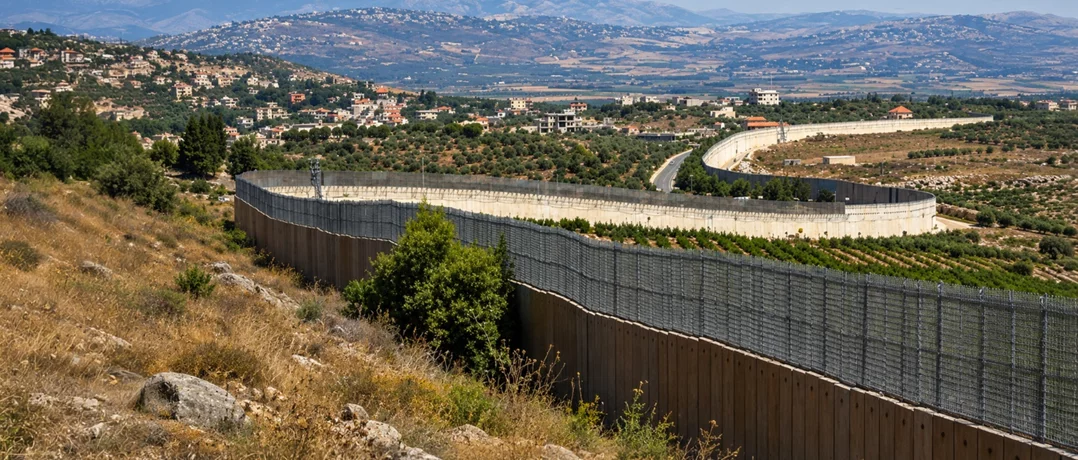
For years, Lebanon’s border with Syria has been a passage for weapons, armed groups and smuggling networks. Controlling it has remained one of the country’s biggest security challenges. Today, however, something appears to be changing.
The recent seizure of 264 kilograms of explosives at the Lebanese-Syrian border raises questions that go beyond the shipment itself. How has the security situation along the Lebanese-Syrian border changed since the fall of Bashar al-Assad’s regime and the weakening of Hezbollah, and what challenges remain in tackling smuggling networks?
What has changed at the border?
Retired General Khalil El Helou told The Beiruter that several factors have contributed to the recent success of Lebanese security forces. The first is improved coordination between the Lebanese Army and the Syrian authorities, something that was largely absent in the past.
“There was initially hesitation on the Lebanese side, followed by hesitation on the Syrian side. Today, cooperation along the border is much better. It is still not perfect, and smuggling continues, but there is cooperation,” he explained.
The recent seizure also suggests that security forces had information about the shipment beforehand.
“A shipment of this kind is not intercepted by coincidence,” El Helou said, adding that greater efforts are being made along the border despite the difficulties that remain.
The fall of the Assad regime and the weakening of Hezbollah have also played an important role in changing the situation.
“Previously, they controlled both sides of the border. On the Syrian side, there were Bashar al-Assad’s people and his intelligence services. On our side, there was Hezbollah, which could do whatever it wanted,” he said.
“With the fall of the Assad regime and the weakening of Hezbollah, the border automatically became more controlled.”
According to El Helou, what distinguished the situation in the past was not simply the movement of illegal goods. Weapons and armed individuals could also cross the border freely.
However, despite these political changes, smuggling networks remain active on both sides of the border.
“Smuggling has always existed along the border. But there is a lot of information indicating that there are deeply rooted mafias on both sides. The state needs to do its job and bring them under control,” he added.
Catching smugglers is not enough
Lebanon’s eastern border with Syria has dozens of illegal crossings. For the Lebanese Army, maintaining a military presence at every crossing is simply not realistic.
“You cannot station a military unit at every crossing. You would need thousands of soldiers, and that is not practical,” El Helou explained.
Instead, he believes that stronger cooperation between Lebanon and Syria, combined with the use of surveillance drones, could help authorities monitor the border more effectively.
But monitoring the border is only part of the solution. For El Helou, the bigger problem lies with the individuals running the smuggling networks.
“When we talk about mafias, there are people at the head of these networks, whether in Lebanon or Syria,” he said.
He stressed that the responsibility does not fall solely on the Lebanese Army. Military Intelligence, the Internal Security Forces, General Security and Lebanese Customs are all concerned with the issue.
Efforts to strengthen this cooperation are already underway. On November 15, Lebanese Interior Minister Ahmad Hajjar visited Damascus, where he discussed border security and the fight against smuggling with his Syrian counterpart, Anas Khattab. Lebanese and Syrian security agencies are already exchanging information to combat smuggling and drug trafficking, with this cooperation having led to several seizures on both sides of the border.
https://www.thebeiruter.com/article/a-new-phase-in-lebanese-syrian-relations/3118
According to El Helou, investigations should not stop with the individuals caught transporting illegal goods. Authorities must identify those organizing the operations and dismantle the networks behind them.
The question of political protection also remains.
“There are rumors that these mafias benefit from political protection. Who is providing that protection? Previously, we would say Hezbollah, but today, there are certainly others besides Hezbollah,” he said.
Who was behind the 264 kilograms of explosives?
El Helou pointed to several possible actors behind the shipment, including Hezbollah and extremist groups operating in Syria. He noted that the Syrian authorities have been pursuing ISIS members, resulting in arrests and armed confrontations.
While several possibilities remain open, he stressed that the investigation must establish who was behind the shipment before any conclusions can be drawn.
The retired General also drew a connection between several other recent security incidents in Lebanon.
“There is a common thread between the cell in the outskirts of Bsharri, the 500 kilograms of C4 seized in Dahr El Baidar and the assassination of the Iraqi officer, and that common thread is Hezbollah” .
However, he made a clear distinction between those incidents and the latest seizure at the Lebanese-Syrian border. He emphasized that any connection between them has yet to be established.
For now, improved cooperation between Lebanon and Syria and the weakening of the groups that previously controlled parts of the border have given Lebanese authorities an opportunity to regain control. But will the Lebanese state rise to the challenge and turn this opportunity into lasting border security?
-
-

-
Natalie DurhamResearcher/Writer
Junior research writer focusing on politics, public policy and international affairs.
-
