



Israel’s decision to seize new “strategic positions” inside southern Lebanon and establish a buffer zone has intensified tensions along the border, raising concerns about a potential long-term Israeli military presence and renewed regional escalation.
Israel’s renewed military push into Lebanon: Echoes of 1980s?
Israel’s renewed military push into Lebanon: Echoes of 1980s?
By Anthony Chamoun | March 05, 2026

Reading time: 10 min
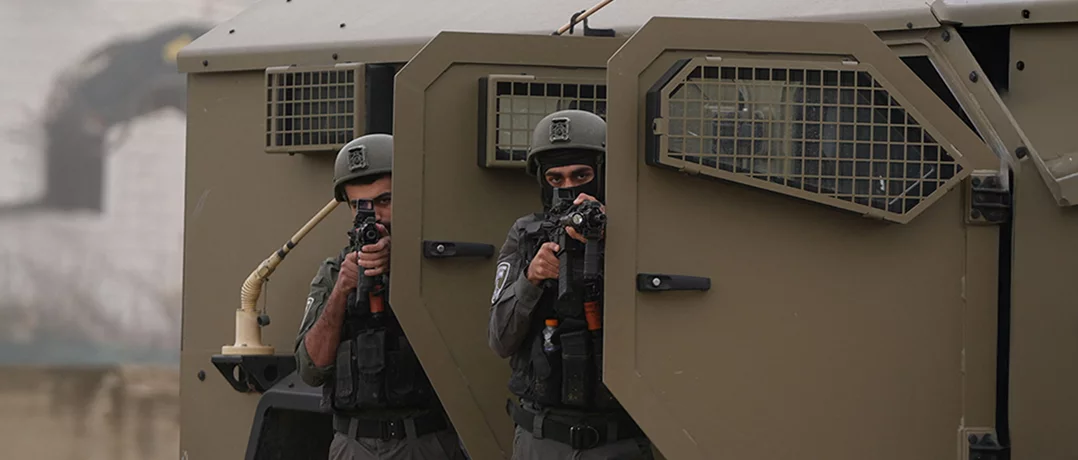
Israel’s decision to authorize its military to seize additional territory inside Lebanon represents a significant development in the evolving confrontation along the Lebanese-Israeli border, as it seeks to establish new “strategic positions” and a buffer zone.
For Lebanon, the renewed ground advance is more than a tactical maneuver; it echoes decades of incursions that have repeatedly challenged Lebanese sovereignty and reshaped domestic politics. Past “limited” operations often expanded into prolonged occupations, leaving enduring impacts on communities and state authority.
While framed by Israel as defensive and temporary, historical precedent and the risk of escalation have prompted concerns and debate in Beirut regarding its scope, duration, and potential long-term consequences on the country’s territorial integrity and stability.
The recent Israeli decision to advance and establish a buffer zone
Israeli officials have stated that the new forward positions are intended to prevent attacks on border towns and to create an additional layer of security between Israeli civilians and armed groups operating from southern Lebanon. Israel Defense Forces (IDF) spokesperson Brigadier General Effie Defrin indicated that forces from the 91st Division had taken control of elevated terrain inside Lebanese territory and were working to establish a buffer between residential areas and potential threats, particularly Hezbollah and allied factions.
From Israel’s perspective, controlling high ground provides tactical advantages, including improved surveillance and the ability to push potential launch sites further from its border communities. Officials have framed the advance as a limited maneuver designed to deter further rocket fire, particularly following recent exchanges with Hezbollah.
Many in Lebanon, meanwhile, have expressed concern that what is described as a tactical step could evolve into a broader security belt inside Lebanese territory; an outright violation of United Nations Security Council (UNSC) Resolution 1701 (2006) as well as of Lebanese sovereignty. Simultaneously, the Lebanese Armed Forces (LAF) has reportedly redeployed from some forward positions; a strategy previously adopted during the 2023-2024 armed conflict.
Although Israel has publicly stated that it does not currently seek a full ground invasion, its declaration that “all options are on the table” has reinforced uncertainty regarding the trajectory of events.
It is worth noting that a “buffer zone” or “security zone” in International Relations (IR) is a designated area created to separate conflicting parties, serving as a neutral space that helps prevent direct confrontation or conflict.
Historical precedents of Israeli invasions and the creation of security zones
Understanding the present situation requires examining the history of Israeli military operations in Lebanon, particularly those that led to invasions and the establishment of buffer or security zones.
1978: Operation Litani
In March 1978, Israel launched “Operation Litani” following attacks by Palestinian militants operating from Lebanon; known as the “Coastal Road Massacre.”
The primary objective of Operation Litani was to destroy Palestine Liberation Organization (PLO) infrastructure south of the Litani River, thereby preventing further attacks on Israeli territory. Israeli forces advanced to the aforementioned river before withdrawing under international pressure.
The UNSC subsequently adopted Resolution 425 (1978), calling for immediate and unconditional Israeli withdrawal, and Resolution 426 (1978), establishing the United Nations Interim Force in Lebanon (UNIFIL) to oversee the departure and restore stability.
Although limited in duration, the operation marked the beginning of a recurring pattern of Israeli incursions into southern Lebanon.
1982: Operation Peace for Galilee
The June 1982 invasion, formally known as “Operation Peace for Galilee,” was far more extensive. Israeli forces advanced beyond southern Lebanon and reached Beirut; the first and only Arab capital that Tel Aviv has ever invaded and occupied.
The operation was initiated in response to escalating tensions along Israel’s northern border, particularly following the attempted assassination of Israel’s ambassador to the United Kingdom (UK), Shlomo Argov, by members of the Abu Nidal Organization. Israeli Prime Minister (PM) Menachem Begin invoked this incident as a principal justification for the invasion, which sought to dismantle the PLO’s military infrastructure and presence in Lebanon, secure Israel’s northern border, and facilitate the conclusion of a peace treaty with Lebanon (an objective that ultimately remained unrealized).
The campaign eventually led to the departure of the PLO leadership from Lebanon but resulted in a prolonged Israeli military presence in the south and strong resentment amongst a significant portion of the Lebanese population. By 1985, Israel had withdrawn from the capital and consolidated a so-called “security zone” in southern Lebanon, maintained in coordination with the South Lebanon Army (SLA), led by Lebanese military officer Saad Haddad. This zone was claimed to prevent cross-border infiltration and reduce rocket fire. However, periodic confrontations in 1994 (Operation Accountability) and 1996 (Operation Grapes of Wrath), coupled with rising domestic opposition to the occupation, ultimately led to Israel’s unilateral withdrawal in May 2000 under PM Ehud Barak’s term.
2006: The July War
The July 2006 conflict between Israel and Hezbollah, triggered by the latter’s cross-border attack, lasted 34 days and involved extensive airstrikes and a ground incursion up to the Litani River.
The war concluded with the adoption of UNSC Resolution 1701 (2006), which expanded UNIFIL’s mandate, ensured IDF withdrawal, and reinforced LAF deployment in the south. Although Israel did not establish a permanent occupation zone afterward, the war reshaped the security landscape along the border, while both sides claimed victory. In its aftermath, former Hezbollah Secretary-General Hassan Nasrallah acknowledged that he would not have authorized the operation had he anticipated the scale of destruction and human losses that ultimately resulted, while the Israeli government appointed the Winograd Commission, whose report highlighted the flaws in the decision-making process and the Israeli political-military leadership’s strategic thinking as well as recommended improvements in the IDF’s preparedness and performance.
2023-2024: Israel-Hezbollah War
On 8 October 2023, Hezbollah launched a “support front” for Gaza, aiming to halt Tel Aviv’s retaliatory war against Hamas (due to the 7 October attacks on Israel). What began as a calculated armed conflict with defined “rules of engagement” soon escalated into a full-blown war, significantly weakening the group and its influence, as well as causing severe destruction to the country’s infrastructure and economy.
The conflict saw Israeli incursions into various Lebanese border towns, which Israel mostly withdrew from following the 27 November 2024 cessation of hostilities. However, the IDF persisted in its targeted military operations and retained 5 strategic positions in southern Lebanon, claiming that it would refrain from completely withdrawing before Hezbollah is completely disarmed.
 Photo: Map showing the potential "security zone" which Israel is reportedly seeking to establish in southern Lebanon
Today’s offensive: Temporary deployment or protracted presence?
The central question is whether the current advance will remain limited to a narrow buffer zone near the border or expand further north. However, even a strip extending several kilometers into Lebanese territory could significantly alter the operational environment along the frontier.
Some Israeli strategic discussions historically referenced the Litani River as a defensible boundary, but there has been no official declaration yet that Israel intends to reach that line in the current escalation. Israeli authorities have repeatedly described the move as tactical and temporary. However, in previous instances, most notably after 1982, initially limited objectives expanded in scope due to evolving battlefield dynamics. From here, the duration of the present deployment may depend on several variables, including Hezbollah’s response, international diplomatic pressure, domestic political considerations in Israel, and the broader regional environment.
Additionally, a full replication of the 1982 invasion appears less likely in the current regional and international context. The 1982 operation occurred amidst the fierce and devastating Lebanese War (1975-1990) as well as in a markedly different geopolitical landscape. Today, international scrutiny, regional alliances, and domestic Israeli considerations differ substantially.
Meanwhile, the experience of the 1985-2000 “security zone” demonstrates how a buffer arrangement initially framed as temporary can evolve into a prolonged de facto presence. Tel Aviv’s determination to end Hezbollah’s military capabilities and apparatus signifies that reaching the Litani River, or even the Awali River, seems to be the objective behind the recent ground push; which the mapping of the Israeli evacuation orders (encompassing over 80 towns and villages in southern Lebanon, particularly south the of the Litani River) and the ongoing IDF incursions into Lebanese territories (such as in Khiam) reveal. Whether Israel would seek a permanent occupation under current circumstances remains uncertain. At the same time, any sustained forward deployment could create new political realities on the ground, complicating future negotiations and increasing the risk of prolonged instability.
The aforementioned perceived threat would have been improbable (given recent official American assurances) had Hezbollah refrained from initiating a unilateral support front for Iran, without consulting its community, the Lebanese people, and the official State. While Israel does not need justifications to launch its operations and pursue its goals, the group has managed to provide it with the necessary argument (to its own population as well as to the broader international community) in order to advance its military and strategic objectives. From here, similar to what occurred during the previous confrontation, Hezbollah has jeopardized its own community as well as undermined the State’s sovereignty and security, including bringing about a potentially prolonged occupation of Lebanese territories.
In conclusion, Lebanon and Israel have repeatedly experienced cycles in which limited operations, primarily caused by the absence of robust state authority in favor of non-state armed actors, produced far-reaching consequences. The coming weeks will determine whether the current buffer zone remains a temporary security measure or becomes another defining chapter in the complex and often turbulent history of one of the world’s most volatile and tense borders.
-
-

-
Anthony ChamounResearcher/WriterFocusing on Political Science and International Affairs.
-
