



Inside the world of families living with disability
Inside the world of families living with disability
By Jenna Geagea | October 02, 2026

Reading time 4 min
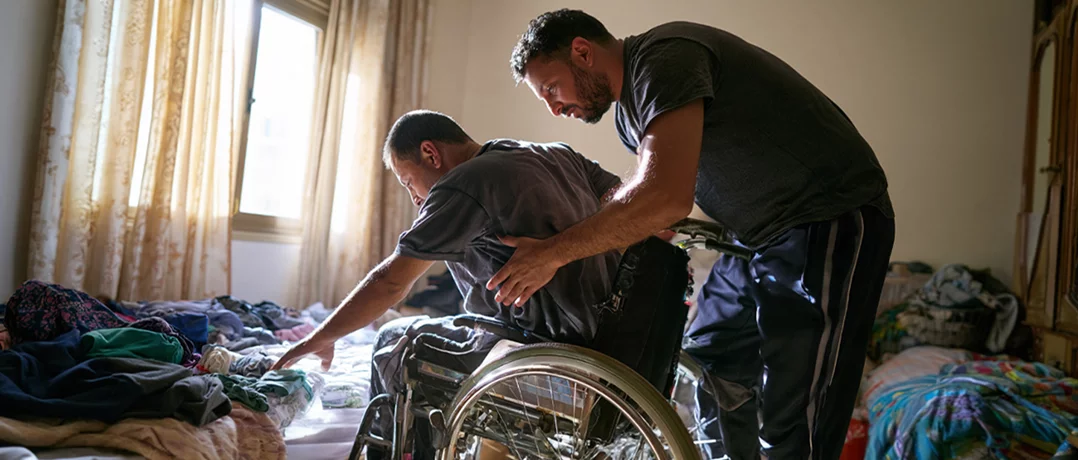
Every morning, in homes that look like any other, a second shift begins before the first one starts. Family caregivers administer medication, manage appointments, fight paperwork and absorb emotional strain, mostly unpaid and often unseen. Their stories rarely center on the medical condition itself. They center on what happens to careers, marriages, friendships and identity when a person's life becomes organized around someone else's needs.
Nadia: "Appointments with work squeezed in"
Nadia's alarm is set for 5:45, but her six-year-old son, who has Down syndrome, is usually awake first. Mornings are a choreography she has refined through trial and error. He insists on dressing himself, and rushing him backfires, so she builds in an extra twenty-five minutes other parents never need.
Her week is a grid of speech therapy, occupational therapy, physiotherapy, cardiology and audiology. "I used to think of my week as work with appointments around it," she told The Beiruter. "Now it's appointments with work squeezed in."
A former project manager, she went part-time when her son was eighteen months old. Big projects stopped coming her way. Meanwhile, therapies the public system does not cover strain a reduced income. She described the advocacy she now performs, chasing referrals, completing forms and negotiating school support, as "a second unpaid job" that draws on every skill she once used for a salary.
Her marriage has been tested too. For two years, conversation with her husband meant logistics. They now guard one evening a fortnight. She is equally watchful of her nine-year-old daughter, who has become so helpful that she risks forgetting to be a child. Nadia is clear about what she wants, "I don't want pity, and I don't want to be called a hero." She asks instead for flexible work, affordable respite care and a school that sees her son as a student rather than a problem.
Jonathan: The obvious choice
For Jonathan, caregiving arrived as a phone call. His sister Lea was paralyzed in an accident four years ago, and with their parents elderly and unwell, he was the one left. At thirty-eight, single and with a flexible job, he was what he called "the obvious choice," and no one asked whether he wanted the role.
His days begin at 6:30 with a two-hour care routine that includes transfers, hygiene and the skin checks that prevent dangerous pressure sores. He works from home in blocks, then returns for physiotherapy, cooking, equipment repairs and insurance paperwork. He sleeps lightly, always listening. The physical toll is difficult, but he identifies something heavier. "I never fully clock out," he admitted.
He abandoned a consulting career with travel and a promotion track for freelancing, and now earns roughly half what he did. He has turned down two roles he would have loved. Beyond the salary lie pension contributions, savings and the compounding years a career depends on.
Sibling caregivers, he has found, occupy a gap in support systems built around parents, spouses and children. Respite care of a few hours a week keeps him functioning, and an online group of fellow siblings gave him the first sense of being understood.
The emotional terrain is complicated. The siblings who once teased each other as equals now navigate an imbalance neither chose. Arguments about the dishwasher are really arguments about loss, and they have learned to name that aloud. Jonathan fears for Lea's future if something happens to him, and he has begun long-term planning with a social worker and a lawyer. He has also made peace with resentment. "It doesn't mean I don't love her," he insisted. "It means I'm human and I'm tired." What sustains him is Lea's own progress; her first paid illustration commission was one of the best days of his adult life.
Nathalie: A life split in two
Nathalie's father, a retired engineer, lost his sight gradually to glaucoma and was fully blind by seventy-three, a year after his wife died. Nathalie, forty-nine, lives twenty minutes away, works full time in human resources and has two teenagers. Caregiving, she told The Beiruter, "crept up on me": first lifts to appointments, then shopping, then bills, until she realized she was running half of his life.
Her role is less physical than Jonathan's but just as relentless. She phones every morning, manages medication and post, and handles banking and forms. Small crises punctuate the weeks: an unreadable gas bill, a misplaced delivery, a fall over a rug someone had moved. The hardest task is emotional, helping a proud man without making him feel helpless. She now asks, "Would you like me to do this, or would you like to try with me?"
At work, her employer has been decent, yet she has used most of her leave on his appointments and declined a regional role requiring travel. When she began discussing her situation openly, several colleagues responded with the same two words, "Me too."
Guilt is the dominant note. Time with her father feels like a betrayal of her children, and the reverse is equally true. Her siblings live abroad and contribute money, which she appreciates, but she has learned to request specific help instead of hoping for it. Practical measures have eased the load, mobility training, contrasting tape on steps, a smart speaker and, eventually, a paid home helper, a step she resisted because she thought it meant failure. There have been gifts too. Over audiobooks, her father tells stories about his working life she never knew.
The life of a caregiver denotes careers narrowed, finances stretched, relationships renegotiated and a persistent tension between love and exhaustion. None asks for praise. They ask for flexible workplaces, accessible respite and systems that recognize caregivers beyond the traditional roles. Caregiving is not a private misfortune but a form of work that society depends on and rarely acknowledges.
-
-

-
Jenna GeageaReporter/Writer
-
