



Giving Lebanon’s apples a second life
Giving Lebanon’s apples a second life

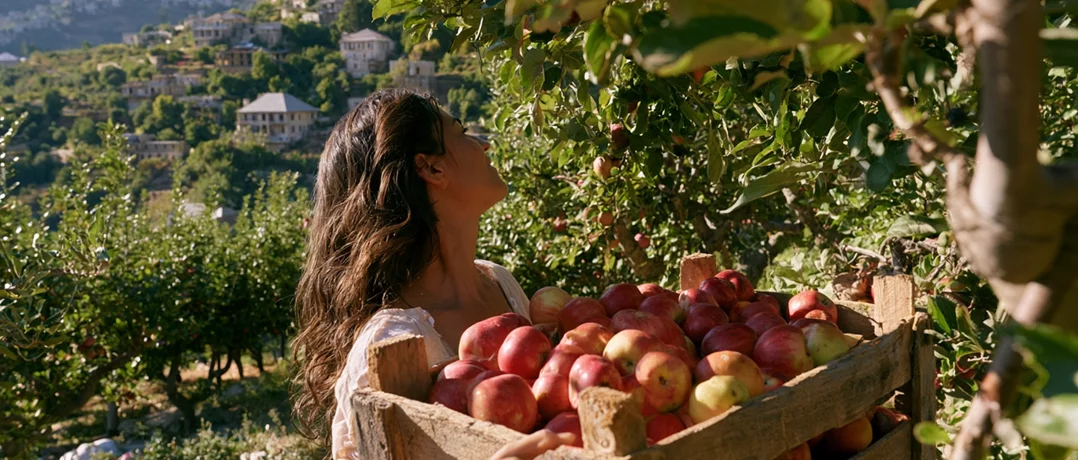
Every autumn, Lebanon’s mountain villages fill with crates of apples. The harvest is a source of pride, but also of worry. Prices swing, transport costs climb, and buyers are never guaranteed. Fruit that is bruised, small or simply surplus can struggle to find a market at all. Across our villages, a few women are answering that problem from their own kitchens. They are turning apples into cakes, pies, tarts and crackers, and in doing so they are adding value to the harvest, keeping local flavors alive and creating work where it is needed.
Zemerrod Fakhry: A business built on lent
Zemerrod, who goes by Zaza’s story began in 2019 in Bsharri, during the Lenten fast. Because all her products are vegan, with no milk, eggs or butter, she began with her mother’s lemon kaak and made it with apples instead. Then came boule de pomme, followed by Arqech, a crisp apple cracker. Customers loved the results so much that she kept baking long after Lent ended.
The reasoning was simple. “We have so many apples here,” she told The Beiruter. “What can we do with all these apples?”
She began alone, in an ordinary home oven. Today she works with a second oven, a solar-powered dryer for apples and a team of six women, one employed monthly and the rest by the hour, though they work almost every day. Her first year used roughly 50 crates of apples. Now she goes through around 200. She starts with windfalls, the apples blown or dropped from the trees, before moving on to freshly picked fruit. Her own family orchard still covers all her needs.
Each product has its own following. Boule de pomme is the best known, children adore her mother’s cake, and Arqech appeals to anyone avoiding sugar. It is also the most demanding to make. The apples are pressed into juice at a shared facility, then washed, cored, partly peeled, grated or sliced, dried in the sun, ground and folded back into the mixture. “It needs more people and more heat,” she noted.
Everything is handmade, and she wants it that way. It keeps the products free of preservatives, and she accepts that apples will always need squeezing, cutting and carrying by hand. She still works from home, which brings some juggling but also something she values, customers come to the house, buy a product and stay for a visit. “They feel as though they are truly taking home something homemade,” she explained.
Her vision reaches beyond her own kitchen. “Starting with nothing more than apples, apple juice and a little flour, I was able to create my own business and provide work for other women.” Her message is as clear as her recipes: “Bsharri does not need towering skyscrapers or grand projects. What it needs are small, meaningful initiatives rooted in the land, where every household becomes a source of self-sufficiency and every hillside has something to give.”
Hanan Abboud: Pies, tarts and local pride
Hanan grew up in Aaqoura among fruit trees and farmland, where apples were so common that nobody thought of them as special. Her baking began at home, with apple cake, pie and tarts for her family during the colder months. Friends began requesting desserts for gatherings, and a hobby slowly became a small business.
“Apples are part of our identity here,” she told The Beiruter. She thinks often about the farmers behind the fruit, who tend trees all year yet can struggle to sell at a fair price. Her answer is to buy locally, choosing varieties to suit each recipe, firm apples for baking, softer and sweeter ones for cakes that cook down. She also welcomes fruit that is slightly small or irregular, since “what matters is its flavor, texture and freshness.”
Her pie starts with gently cooked apples, seasoned with butter, cinnamon and a little lemon juice, so they soften without turning to mush. The pastry must be buttery but sturdy enough to resist sogginess. The cake is softer and made for everyday occasions, topped with thin slices that caramelize in the oven. The tart, with its cream or almond base and glazed pattern of apple slices, is all about presentation. “I want someone to open the box and feel that the person who prepared it paid attention to every detail,” she explained.
Every harvest differs, so she tastes the fruit before deciding how much sugar to add. “Baking is about understanding the ingredient you have in front of you.”
Growth brings real challenges. Ingredients, electricity, packaging and delivery all add up, and she can no longer bake on a whim. She plans quantities, manages orders and protects quality, especially for birthdays and family tables. Looking ahead, she hopes to make longer-lasting products such as jam, compote and dried apple slices, work with more local farmers and eventually move into a small workshop, without losing her village roots. “I want to build something that makes sense for where I live.”
Supporting local products means investing in the hands that cultivate Lebanon’s land and preserving the value of what it produces. The apple, interlaced in the country’s agricultural heritage, is a symbol of Lebanese pride, a livelihood for local farmers and a reminder of the potential that grows within our own soil.
-
-

-
Jenna GeageaReporter/Writer
-
